
Last updated November 2, 2026
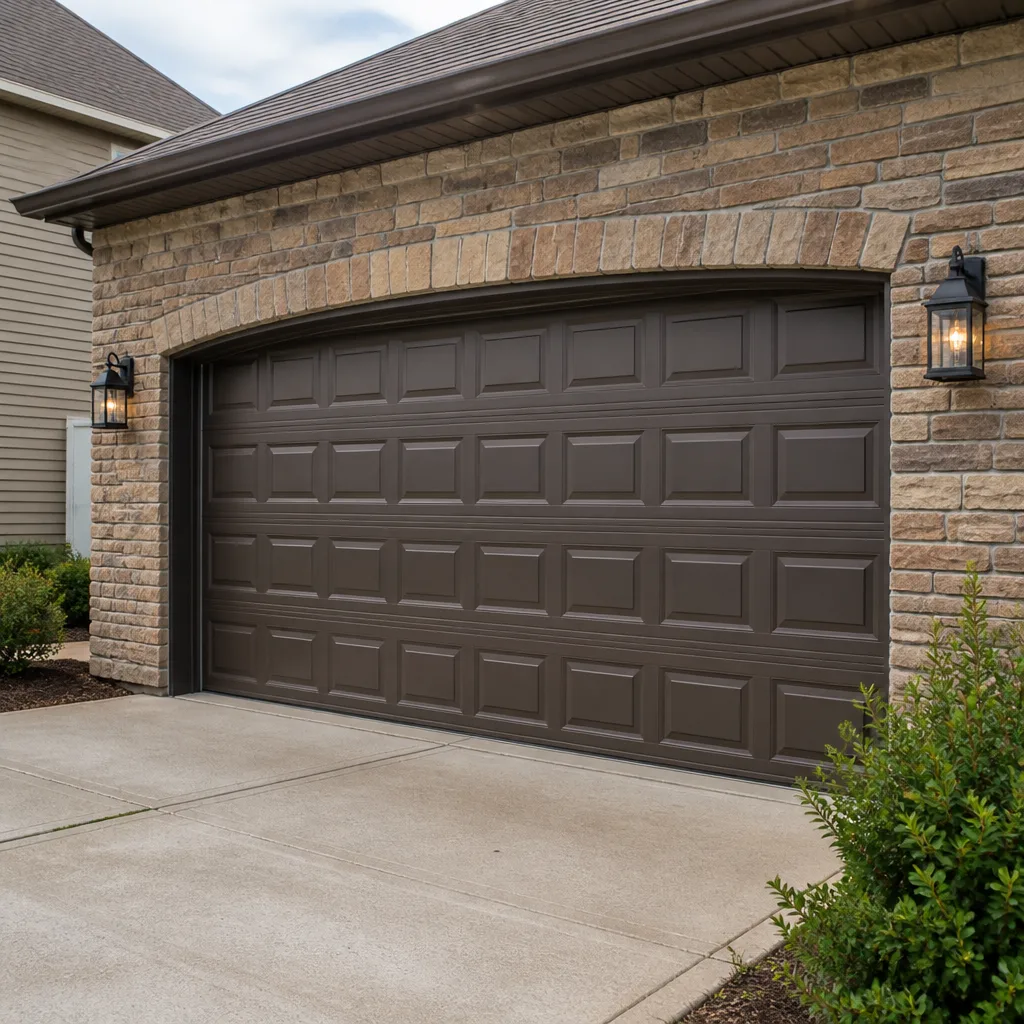 Raised-panel steel
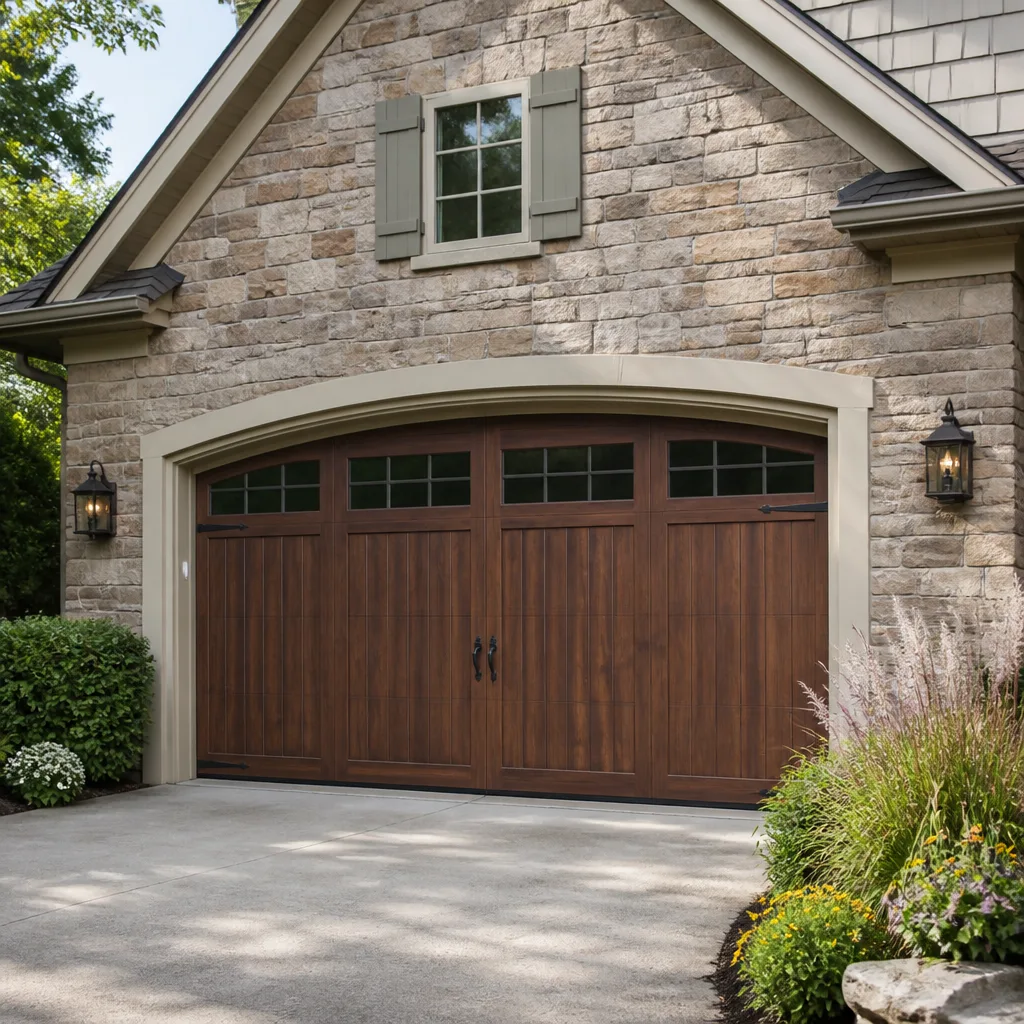 Carriage house
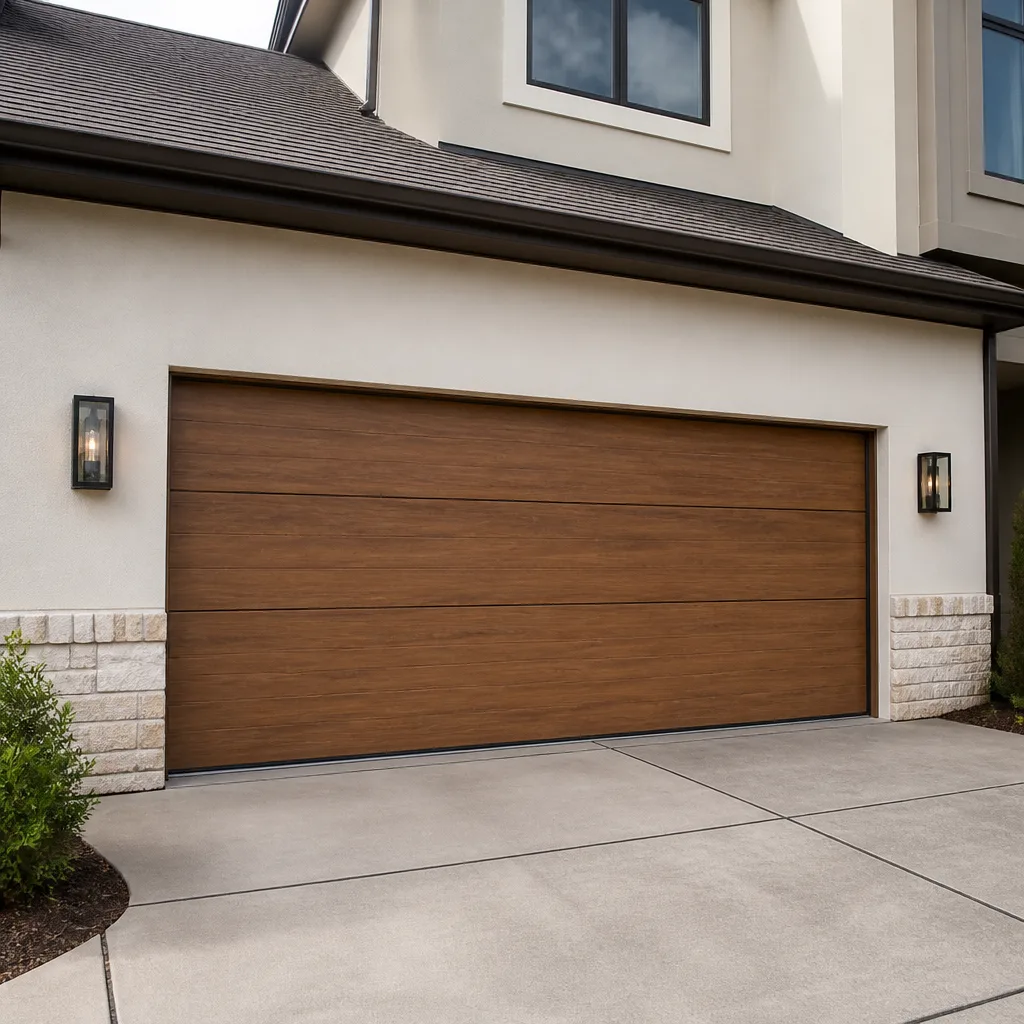 Modern flush
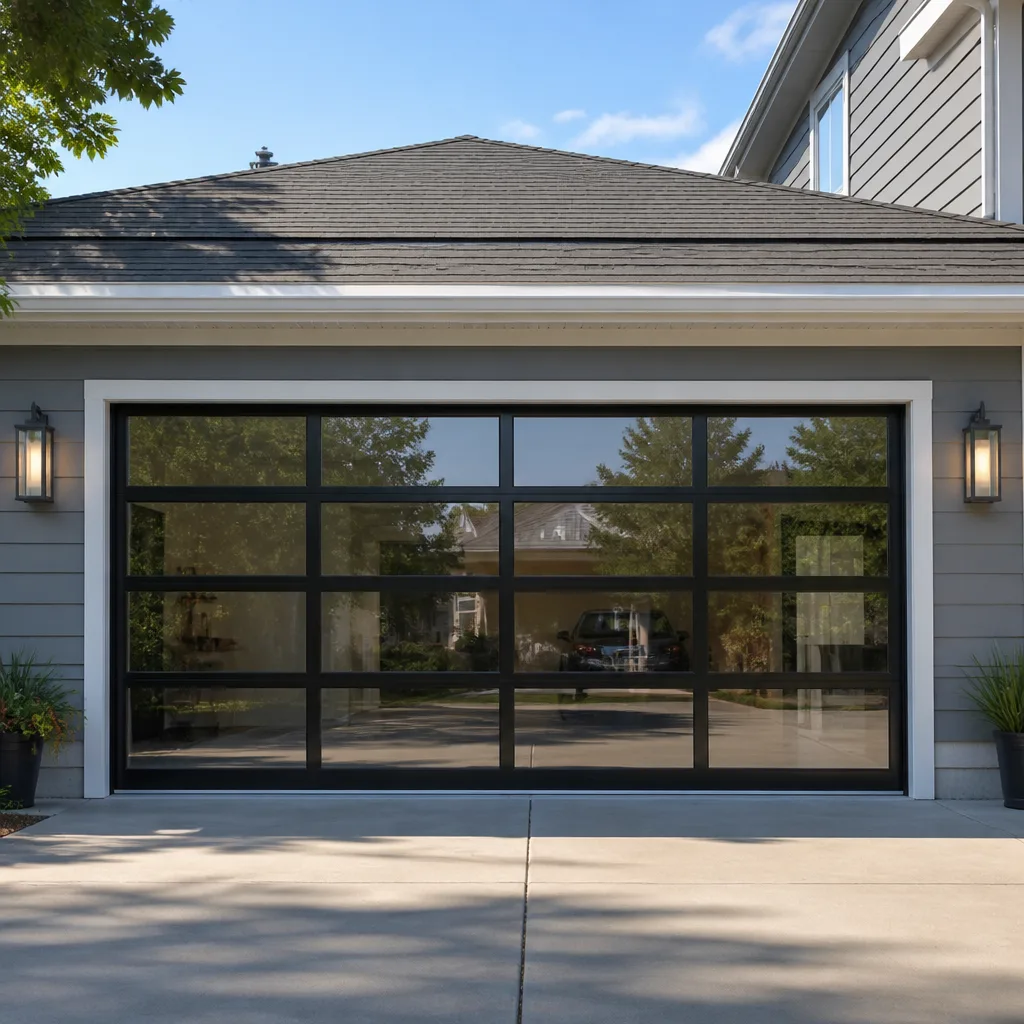 Full-view glass
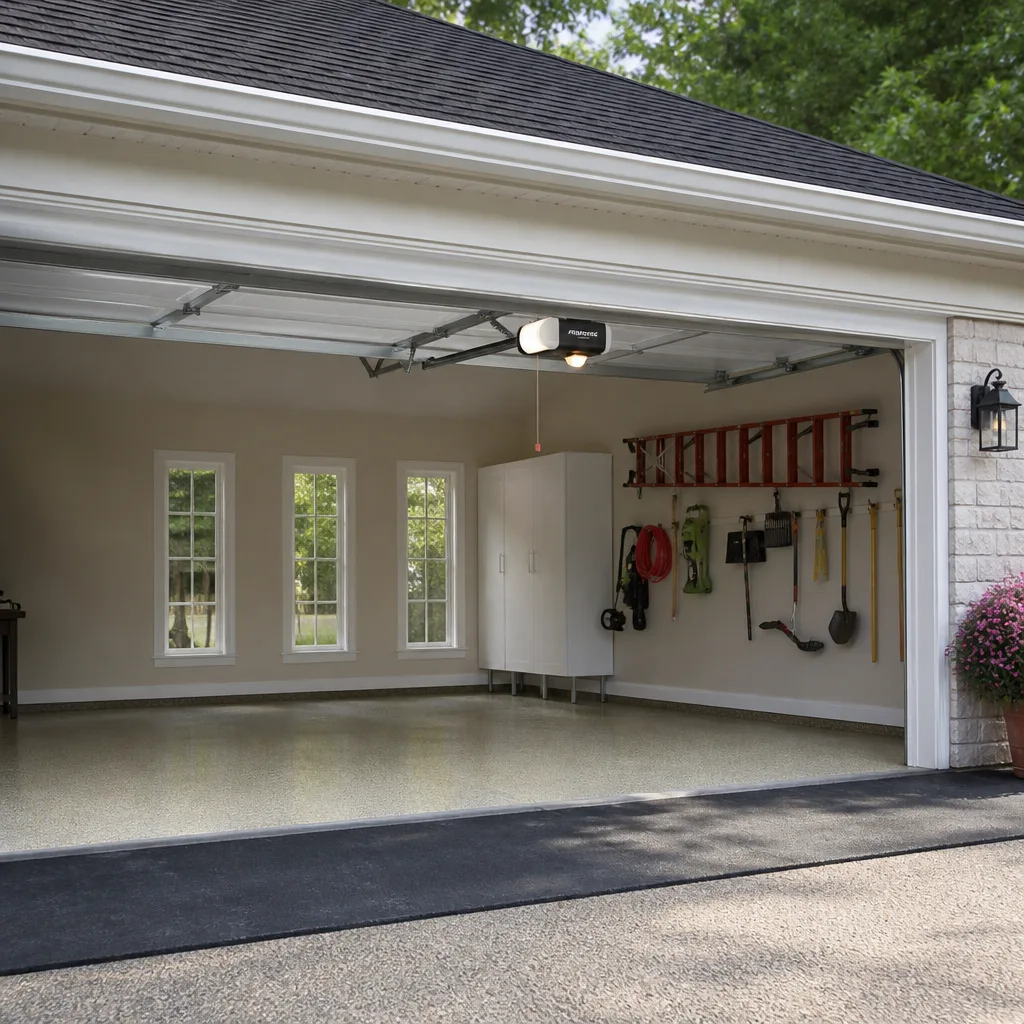 LiftMaster openers
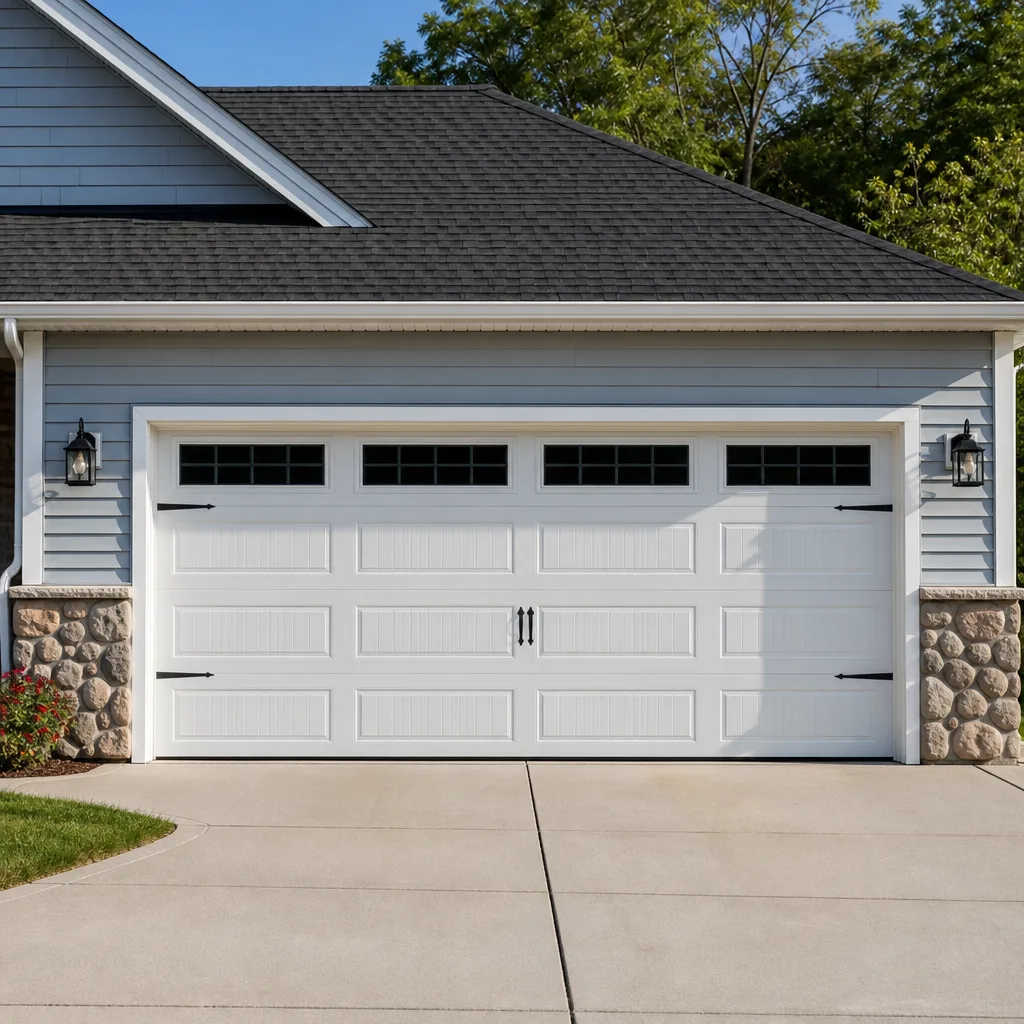 Chamberlain openers
Full 25-point door and opener safety check with every visit - springs, cables, rollers, tracks, and your LiftMaster or Chamberlain opener included
You get a price before we start. It does not change when the truck arrives.
Get your free estimateGarage Door Repair Troubleshooting: Common Problems and How to Fix Them
The most expensive words a homeowner says to a technician are “it just stopped working.” Vague symptom descriptions lead to longer diagnostic time, broader part assumptions, and higher quotes. Specific observations cut repair time in half. In Hemet, where summer heat accelerates spring fatigue and winter winds stress roller bearings, knowing the difference between a grinding sound and a popping sound can mean the difference between a $40 roller replacement and a full door replacement. This guide teaches you the symptom-to-cause reasoning a trained technician uses, so you can speak precisely about what’s wrong before anyone arrives. By the time you finish reading, you’ll be able to narrow most garage door failures to the specific component responsible, and you’ll know which fixes are safe to attempt and which ones require our Garage Door Repair services.
Styles & brands we work with
- Raised-panel steel
- Carriage house
- Modern flush
- Full-view glass
- LiftMaster openers
- Chamberlain openers
Quick Answer
Garage door troubleshooting starts with one question: does the door move at all, or does it move incorrectly? A door that won’t budge typically points to a broken spring, a disconnected opener, or an obstruction. A door that moves but reverses, sags, or makes noise points to sensor misalignment, worn rollers, or track problems. The fastest diagnostic step is the manual release test: pull the red emergency cord, then lift the door by hand. If it lifts hard, the problem is mechanical (springs, rollers, tracks); if it lifts easily, the problem is electrical (opener, sensors, remote).
Table of Contents
- The Symptom-First Troubleshooting Tree
- The 60-Second Manual Release Test
- What Specific Sounds Mean
- The Five-Point Visual Inspection
- YouTube Fixes That Make Things Worse
- Hemet Climate Factors That Accelerate Failures
- Common Mistakes to Avoid
- When to Call a Professional
- Frequently Asked Questions
- The Bottom Line
The Symptom-First Troubleshooting Tree
Most garage door guides start with parts. Springs, rollers, sensors, openers. That’s backwards. A technician starts with symptoms because each symptom branches to a distinct set of causes. Here’s the tree we use on every service call in Hemet, broken into four branches.
Branch 1: Door Won’t Move at All
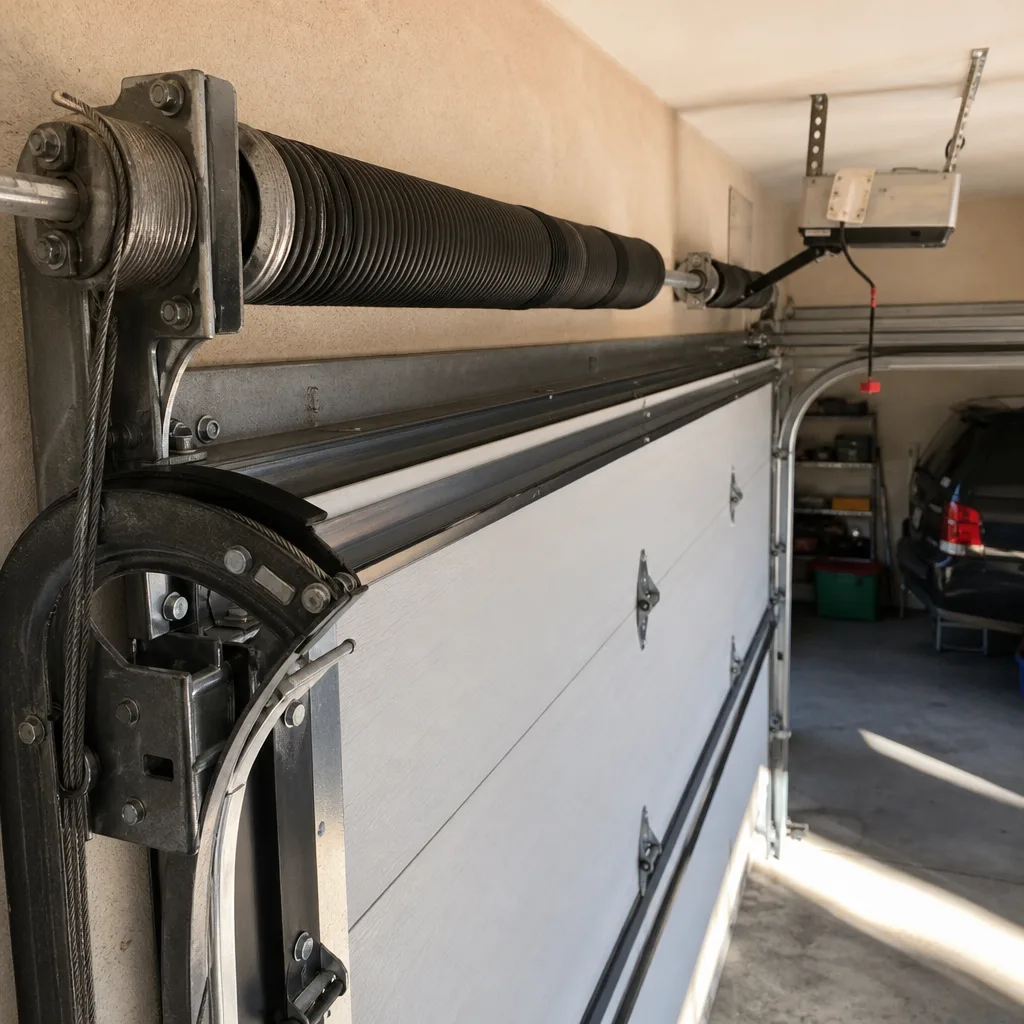
When the door refuses to budge, you’re looking at one of five causes. The most common is a broken torsion spring. These springs sit on a horizontal bar above the door and carry the door’s entire weight. When one breaks, it makes a loud popping sound like a gunshot, and the opener motor strains uselessly because it can’t lift several hundred pounds alone. The second cause is a disconnected opener, which happens when the emergency release cord gets pulled accidentally. The third is a dead opener or tripped circuit. The fourth is an obstruction in the tracks, often a rock or a piece of debris wedged against a roller. The fifth is a bent track from a vehicle impact or a shifting door frame. Here’s the key distinction: a broken spring makes a loud noise when it fails. A disconnected opener makes no noise at all. If the motor runs but the door doesn’t move, that’s a disconnect. If the motor doesn’t run, that’s electrical. If the motor runs, strains, and stops, that’s a broken spring.
Branch 2: Door Moves Partway Then Stops
This symptom points to a different set of problems. When a door rises six inches and stops, or opens halfway and binds, the usual culprits are bent tracks, a broken extension spring on one side, or a failing opener gear. The tell between track problems and spring problems is whether the door stops at the same spot every time. A bent track creates a consistent stopping point where the roller hits the damage. A failing opener gear creates inconsistent stops at different heights. In Hemet, we see a seasonal pattern here: track expansion in August heat can cause binding that disappears in cooler months, which makes homeowners think the problem resolved itself. It didn’t; the track is still damaged and will bind again.
Branch 3: Door Reverses Before Reaching the Floor
When a closing door reverses and goes back up, the first suspect is the photo-eye sensors. These small lenses sit near the floor on both sides of the door opening. If they’re misaligned, dirty, or blocked by a leaf or a spider web, they send a false obstruction signal. The second suspect is the opener’s force setting, which is a dial or digital setting that controls how much resistance the motor overcomes. When force limits are set too low, the motor interprets normal friction as an obstruction and reverses. But here’s what many guides miss: a door that reverses intermittently, especially in the afternoon, may have a logic board overheating. We see this on Chamberlain and LiftMaster units in Hemet garages that face west and bake in afternoon sun. The board expands and contracts, creating intermittent false signals.
Branch 4: Door Makes Noise But Doesn’t Engage
When you hear a whirring or grinding sound but the door doesn’t move, the opener motor is running but not transferring power to the drive mechanism. On belt-drive openers, a stripped gear inside the motor housing is the most common cause. On chain-drive units, a broken chain or a sprocket that’s lost its teeth. On screw-drive models, especially Genie units, the carriage can strip where it rides the screw. We diagnose this in seconds by watching the top of the opener: if the sprocket spins but the chain stays still, the gear is stripped. If the chain moves but the door doesn’t, the carriage is stripped. Both are straightforward opener repairs that Garage Door Opener Repair in Hemet handles regularly.
The 60-Second Manual Release Test
This single test separates opener problems from mechanical door problems faster than any other diagnostic step. It’s safe to perform and doesn’t require any tools. Here’s how it works, followed by what the results mean.
- Close the door first. If the door is open, do not pull the release cord. The door can crash down under its own weight if the spring is broken.
- Pull the red emergency release cord hanging from the opener rail. This disconnects the door from the opener carriage.
- Lift the door by hand using the handles or the bottom edge. Lift slowly and watch for resistance.
- Observe the door’s behavior through the full range of motion.
If the door lifts smoothly with moderate effort and stays open on its own, the springs are doing their job and the problem is in the opener: the motor, the gear, the logic board, or the remote signal. If the door feels extremely heavy, or if it slams shut when you let go, the springs have failed or lost tension. A door with a broken torsion spring can weigh 200 to 400 pounds, which is why spring replacement is not a DIY job. If the door binds at a specific point, or scrapes the track, you’ve found a mechanical issue that exists regardless of the opener. This test takes under a minute and tells you exactly which half of the system to focus on. When a Hemet homeowner calls us and says “I pulled the release cord and the door won’t stay up,” we know before arriving that we’re bringing spring replacement parts, not opener parts.
What Specific Sounds Mean
Garage doors talk. Each sound points to a different failed component, and learning the vocabulary saves diagnostic time. Here are the five sounds we hear most often in Hemet garages, and what each one means.
- Popping or banging from above the door: This is a torsion spring breaking. It’s unmistakable, and it happens in a fraction of a second. After the pop, the door won’t lift and the opener strains. This is the most dangerous sound on this list because the spring is under extreme tension.
- Grinding from the motor housing: This is the opener’s internal gear stripping. The sound is rhythmic and harsh, like a coffee grinder. The motor runs but the drive mechanism slips. Common on LiftMaster and Chamberlain models after years of use.
- Squealing or screeching from the sides: This is a roller bearing failing. Rollers with ball bearings start squealing when the bearings lose lubrication and seize. Nylon rollers with worn bearings screech against the steel shaft. Replacing rollers is straightforward and inexpensive compared to the damage a seized roller can do to tracks.
- Rumbling or rattling during travel: This points to loose hardware, worn hinges, or a door that’s out of balance. The rumbling often comes from the door panels themselves as they flex against stress points. Loose hinge bolts are a quick fix; a door that has shifted out of alignment is more involved.
- Grinding then stop: This is a door that’s encountering resistance. The opener grinds against the load, detects the obstruction through its force sensor, and stops. Common causes are a bent track, a roller jammed against the track, or a spring that’s partially failed and isn’t counterbalancing the door’s weight properly.
We train technicians to listen before they look. Sound narrows the diagnostic path faster than visual inspection because each sound is produced by a specific mechanical action. A homeowner who calls and says “it’s grinding then stopping” gives us a head start on parts and estimates. A homeowner who calls and says “it’s making a noise” gives us nothing to work with.
The Five-Point Visual Inspection
This is the inspection we perform in the first two minutes of any service call in Hemet. It’s safe to replicate from ground level because it doesn’t require touching anything under tension or reaching into the door’s path. Walk through these five points in order, and you’ll spot the majority of visible failures.
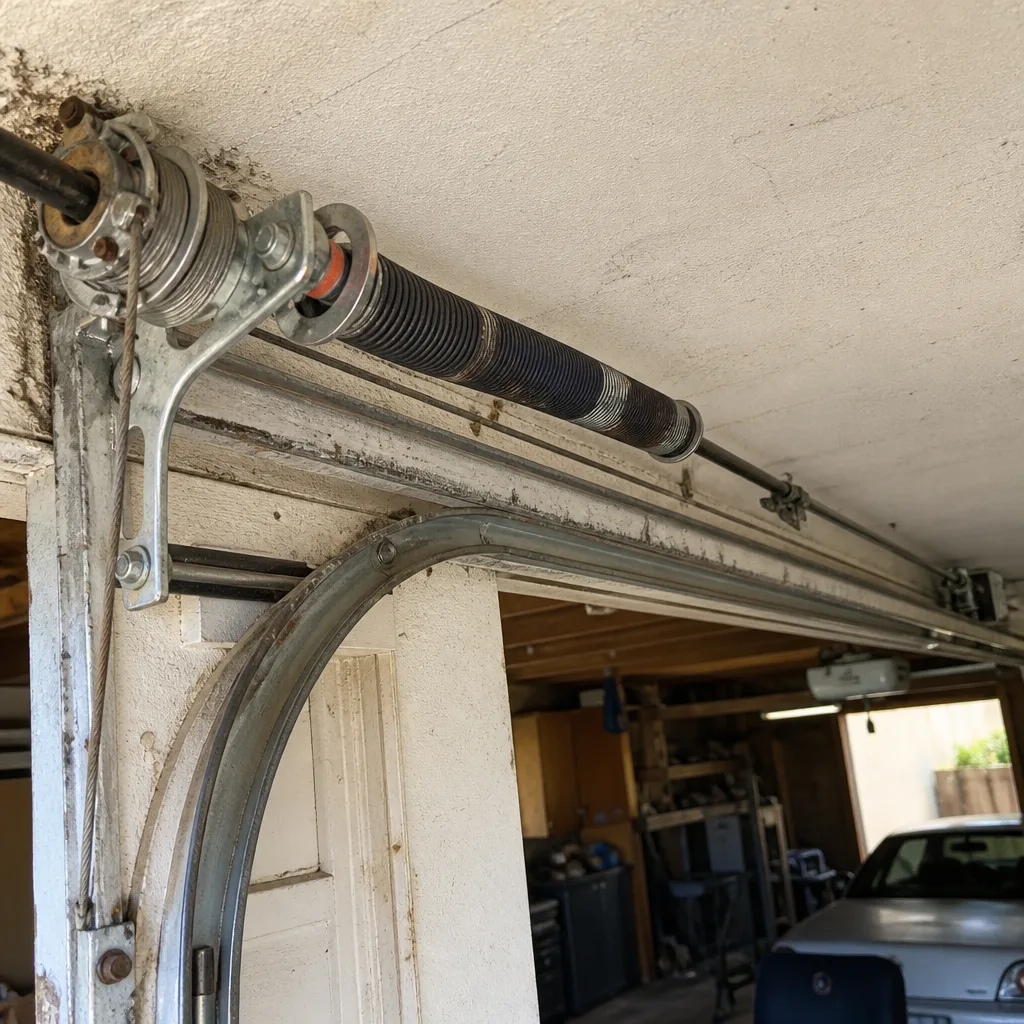
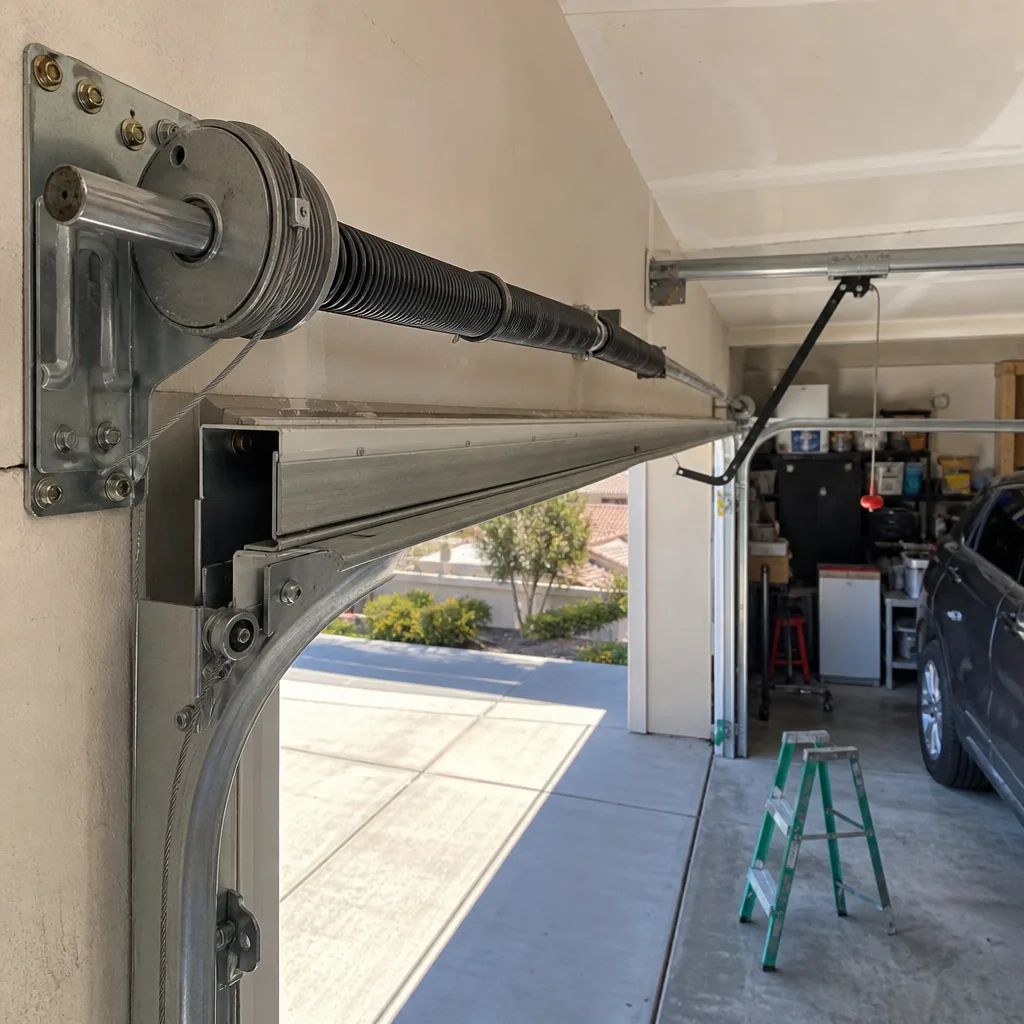
- The springs above the door. Look for a visible gap in the torsion spring coils or a dangling extension spring on one side. A broken torsion spring has a clean separation point, often with a two-inch gap between coil sections. If you see this, do not attempt to operate the door manually or with the opener.
- The cables on both sides. Look for frayed strands, slack, or a cable that’s off its drum. Cables should be taut and evenly wound on the drums at both ends of the torsion shaft. A frayed cable means the spring is doing more work than it should, which means the spring is about to fail if it hasn’t already.
- The rollers in the tracks. Look for missing rollers, rollers that sit at an angle in the track, or rollers with visible wear on the wheel edges. You can see the roller wheels from the side of the track. A roller that’s worn flat on one side has been binding for a while.
- The track alignment. Stand inside the garage and look up the length of each vertical track. The track should run straight and parallel to the door edge. A visible bow, a gap between the track and the wall, or a kink near the bottom means the track has been impacted and is guiding the door incorrectly.
- The opener rail and chain. Look for a loose chain, a belt with visible cracks, or a rail that’s sagging. The chain or belt should have a slight droop but not hang loosely. A chain that’s tight as a guitar string is wrong; it’s transferring excess force to the sprocket.
This five-point check catches roughly 80% of visible failures before any tools come out. It also gives a Hemet homeowner a way to describe what they’re seeing in technical terms, which shortens phone diagnostics and gets the right parts on the truck the first time.
YouTube Fixes That Make Things Worse
We respect a homeowner who wants to understand their door. But some of the most-watched garage door repair videos on YouTube teach adjustments that mask serious problems and set up more expensive failures later. Here are three common ones we see in Hemet, and why they’re dangerous.
Adjusting Limit Screws to Fix a Door That Won’t Open
The limit screws or limit settings on the opener control how far the door travels up and down. When a door won’t open fully, YouTube’s answer is often to adjust the limit so the opener travels farther. The problem: a door that’s lost travel distance is frequently telling you the springs are failing. The opener’s limit is set at the factory to match a door’s correct balance. When springs lose tension, the opener can’t push the door the same distance. Cranking the limit up forces the opener to work harder against a heavier door, which burns out the motor and strips the gear. The correct fix is rebalancing or replacing the springs, then re-setting the limits to match a properly balanced door. We see this pattern every month in Hemet: a homeowner watches a video, adjusts the limits, and calls us a week later with a dead opener that would have survived if the spring had been addressed first.
Lubricating Noisy Tracks
Spraying lubricant on the tracks is one of the most common mistakes we see. Tracks don’t need lubrication. Rollers need lubrication, specifically the bearings and the roller shafts. When lubricant is sprayed on tracks, it collects dust and dirt, creating a paste that increases friction and accelerates roller wear. The correct lubrication points are the roller bearings, the hinges, and the torsion spring itself. Never the tracks. A squealing door in Hemet almost always has dry roller bearings, not dry tracks.
Tightening the Chain to Fix a Shaking Door
A shaking or vibrating door often leads homeowners to tighten the opener chain, assuming slack is the problem. Over-tightening a garage door opener chain transfers shock loads directly to the sprocket and the motor shaft, which shortens opener life. A shaking door is more often caused by worn rollers, loose hinge bolts, or an out-of-balance door. The chain has a specific tension specification, and exceeding it doesn’t fix the shake; it just wears out the opener. We’ve replaced openers in Hemet garages where the chain was so tight it couldn’t be deflected more than a quarter inch.
Hemet Climate Factors That Accelerate Failures
Garage doors in Hemet face specific environmental stresses that a generic troubleshooting guide won’t account for. Understanding these local factors helps homeowners anticipate failures before they happen and diagnose problems more accurately when they do.
Summer heat is the biggest accelerant. Hemet regularly sees daytime temperatures above 100 degrees from June through September. That heat expands the metal in torsion springs, weakening the temper over repeated cycles. A spring rated for 10,000 cycles in a moderate climate may fail at 7,000 cycles when subjected to continuous thermal stress. We also see track expansion in uninsulated west-facing garages, where the afternoon sun heats the track unevenly and causes temporary binding that disappears when temperatures drop.
Winter brings a different set of problems. Cold mornings in Hemet, especially in the foothill neighborhoods where temperatures dip lower than the valley floor, thicken the grease in older opener gears and make motors work harder on their first cycle of the day. We hear from homeowners in Valle Vista and East Hemet who say the door works fine all day but struggles in the morning. That’s cold grease. A gear that’s already partially worn will fail on a cold morning rather than a warm afternoon.
Wind is a Hemet constant, and it affects door alignment over time. The sustained winds that come through the San Jacinto Valley push against the door face, and over years, that pressure loosens hinge bolts and shifts track alignment slightly. A door that’s been through several wind seasons often shows slight track spread at the top of the opening, which causes the top rollers to bind.
Dust is the final local factor. The dry air and occasional Santa Ana winds deposit fine dust on every horizontal surface in a garage, including the photo-eye lenses and the opener’s internal sensors. We clean more photo-eyes due to dust accumulation in Hemet than for any other reason. A lens that’s coated in dust reflects poorly and sends false obstruction signals that cause the door to reverse.
Common Mistakes to Avoid
- Ignoring a squealing roller for months. A squealing roller is a bearing failure in progress. When the bearing seizes completely, the roller stops spinning and begins to slide along the track, which can carve a groove into the track and turn a $40 roller replacement into a several-hundred-dollar track replacement. Address the squeal early.
- Replacing the opener when the springs are the problem. We see this constantly. A homeowner’s door stops opening, and they assume the opener is dead. The manual release test would have shown the door is heavy because the spring failed. The opener was fine. This mistake costs hundreds of dollars and doesn’t solve the problem.
- Pulling the emergency release cord while the door is open. The release cord is designed to be pulled when the door is closed. Pulling it while the door is open disconnects the door from the opener while the door is under full spring tension, which can cause the door to crash down and injure anyone beneath it. If the door is stuck open, do not pull the cord. Call a professional.
- Running the opener after a spring breaks. When a torsion spring breaks, the door’s weight has nothing to counterbalance it. Running the opener against that load burns out the motor, strips the internal gear, and can damage the door panels. The moment you hear the pop of a breaking spring, stop using the opener entirely.
- Replacing one spring instead of both. Torsion springs wear together. When one breaks, the other is at the end of its service life. Replacing only the broken spring saves money in the short term and guarantees another service call within a year. Any professional in Hemet will recommend replacing both springs at the same time, and that’s not an upsell, it’s the correct repair.
When to Call a Professional
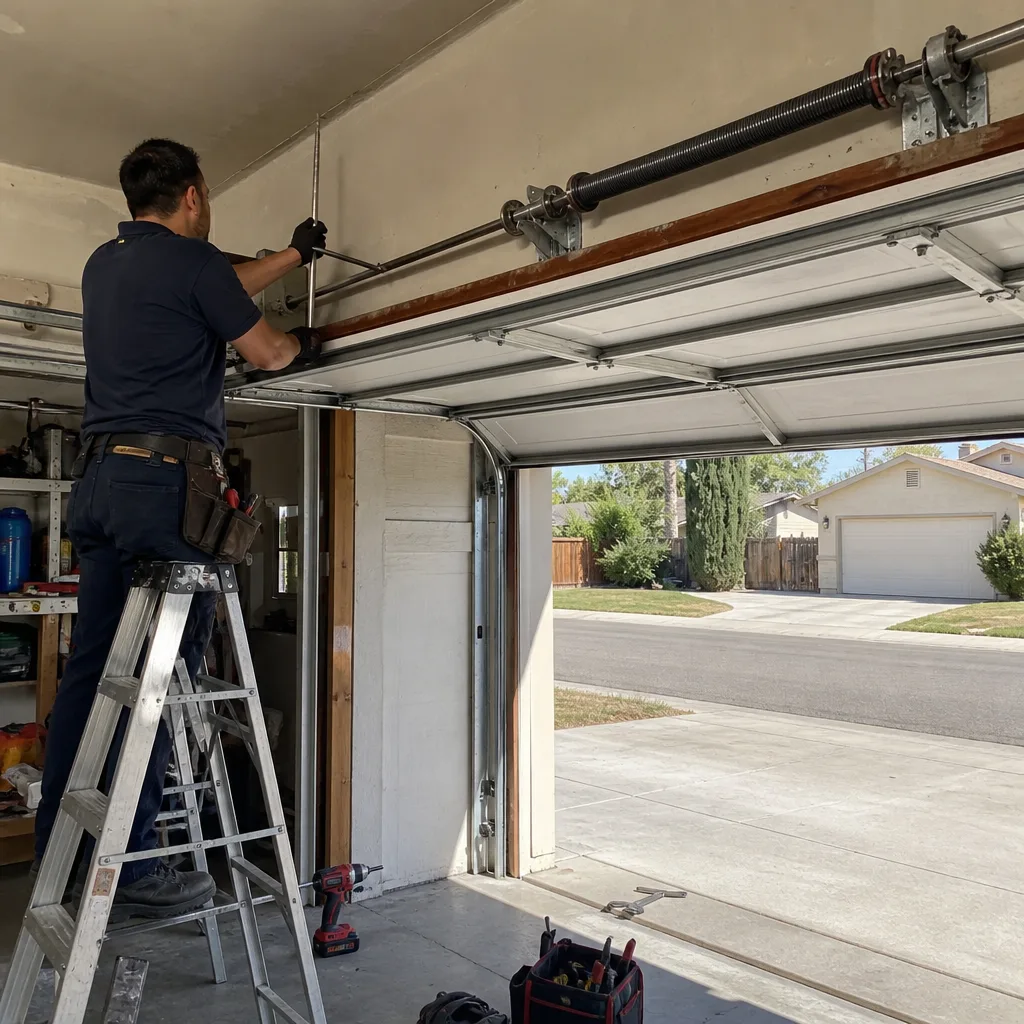
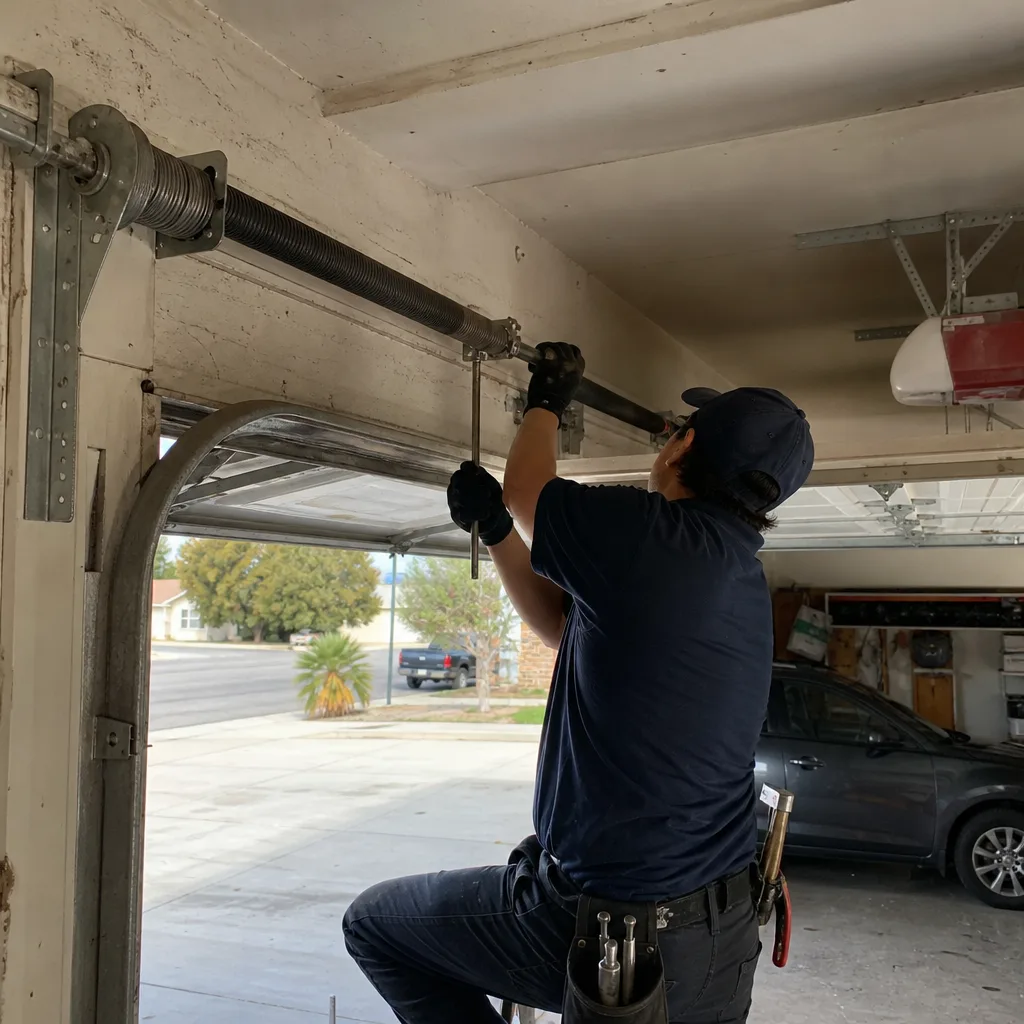
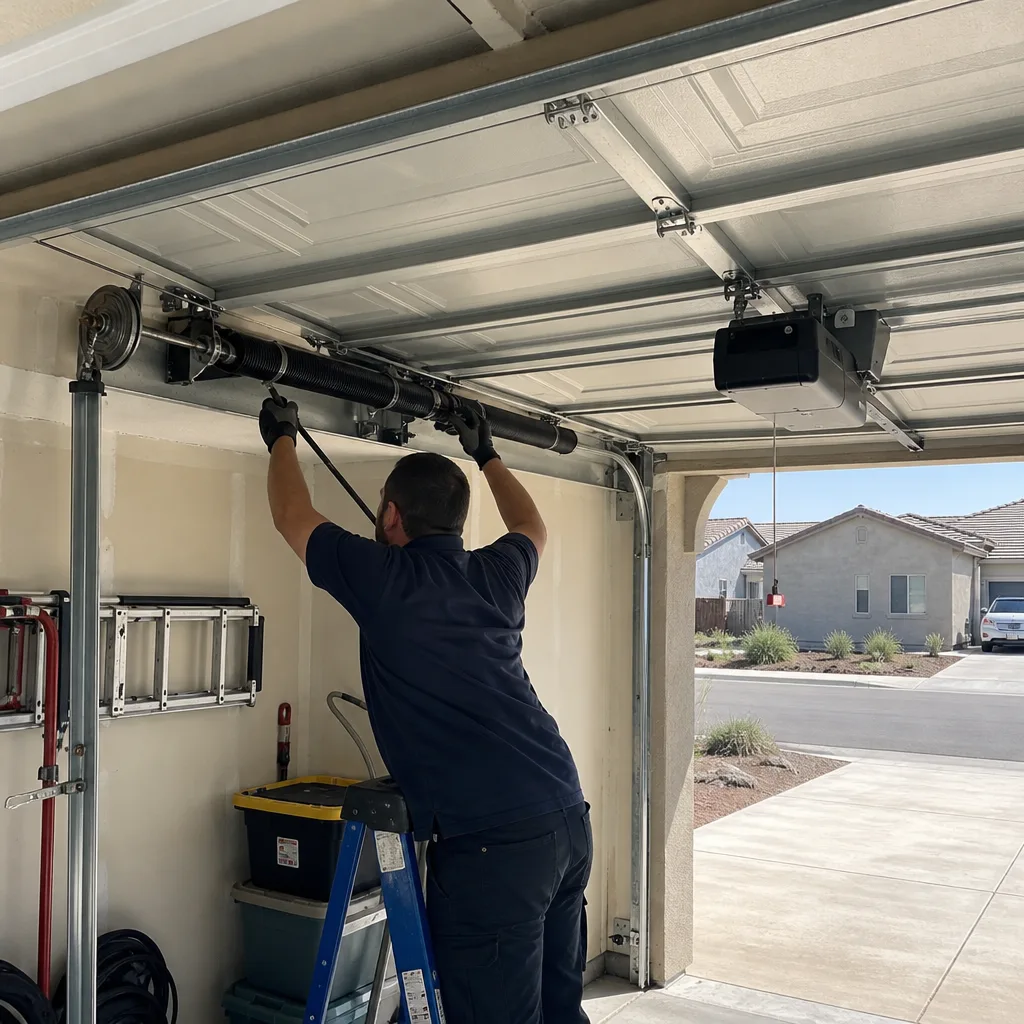
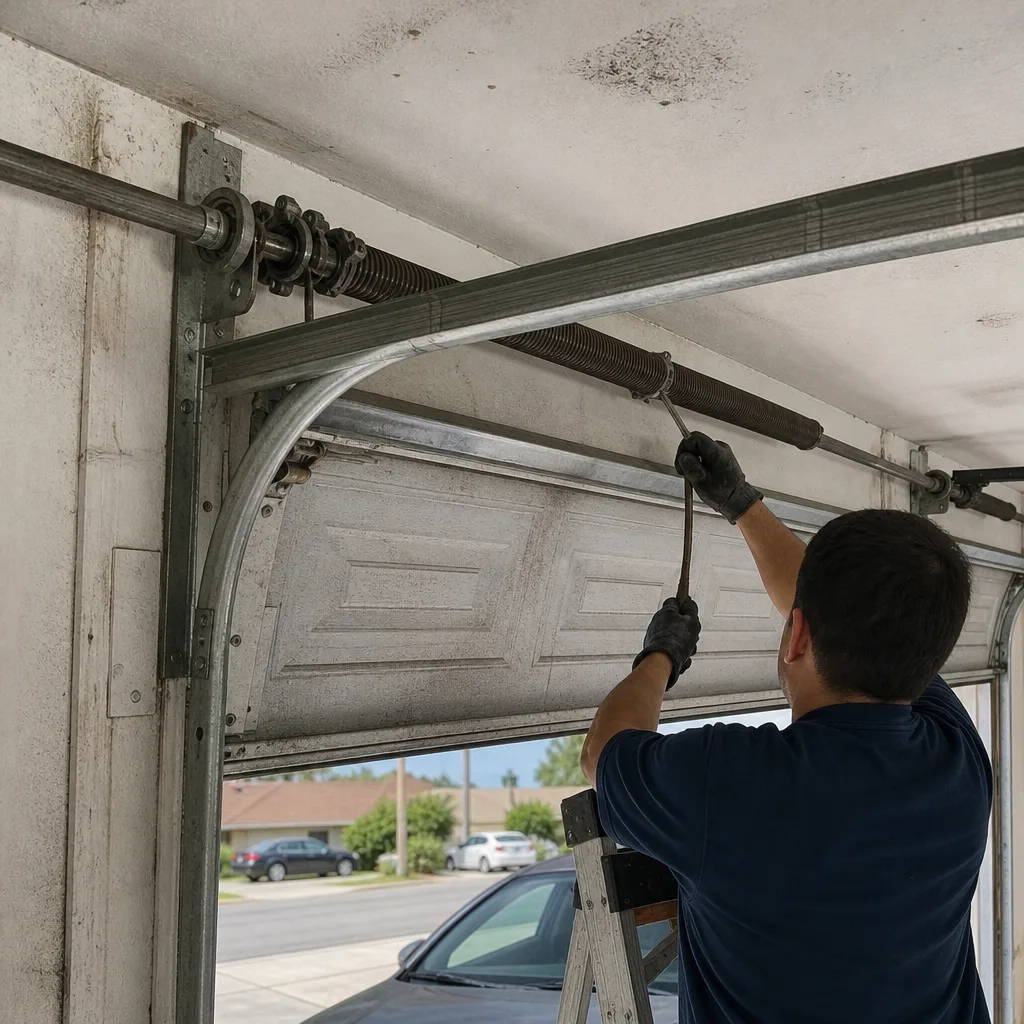
Spring replacement is a professional-only job. Torsion springs hold hundreds of pounds of tension, and the release of that tension is dangerous without proper winding bars and training. No YouTube video can substitute for the years of repetition a technician has with spring mechanics across brands like Amarr, Wayne Dalton, and Raynor doors. Track work is also professional territory because the door’s weight rests on the track alignment, and a bent track can throw the entire door out of balance. Opener gear replacement is approachable for some homeowners, but opener logic board diagnostics require specialized tools. If your door has a broken spring, a frayed cable, a bent track, or an opener that’s running but not engaging, the safe move is to call Garage Door Repair in Hemet for an assessment. Garage Door Service Hemet offers free estimates in Hemet, call (833) 589-9121.
Frequently Asked Questions
A broken torsion spring makes a loud popping sound at the moment of failure, and after that the door won’t lift even with the opener running. Look for a visible gap in the spring coils above the door. If you see a separation, the spring is broken and the door should not be operated until it’s replaced.
A door that reverses before closing almost always has a photo-eye sensor problem. The sensors are dirty, misaligned, or blocked by an object. Clean the lenses on both sides, make sure each light is solid (not blinking), and check for anything in the beam path. If the problem persists, the sensor wiring or opener logic board may need repair.
No. Torsion springs are under extreme tension and can cause serious injury or death if released improperly. This is the one garage door repair that has zero margin for error. A trained technician has the correct winding bars, understands the spring’s cycle rating, and matches the replacement to the door’s exact weight and height.
Most torsion springs are rated for 10,000 cycles, which typically translates to 7 to 10 years of normal use. In Hemet’s summer heat, springs often fail at the lower end of that range because thermal expansion weakens the metal. If your springs are approaching seven years old, proactive replacement before failure can save you from a door that won’t open at the worst possible time.
In Hemet, this pattern usually points to thermal expansion in the tracks. West-facing garage doors absorb afternoon heat, the metal tracks expand, and the door binds at the point of expansion. When temperatures cool overnight, contraction frees the door again. Replacing a section of bent track or adding clearance to a tight curve usually solves it.
First, check that the opener has power and that the outlet isn’t tripped. Next, look at the springs above the door for a visible gap, which indicates a break. If the springs look intact, pull the emergency release cord and try lifting the door by hand. If it lifts easily, the problem is in the opener. If it’s heavy, the problem is mechanical. Call Garage Door Opener Repair in Hemet or a local spring specialist with this diagnostic information, and the estimate will be more accurate from the first call.
The Bottom Line
Garage door troubleshooting is a diagnostic process, not a guessing game. The difference between a $40 roller replacement and a $400 spring job is observation: which sounds you hear, which test you run, which symptoms you can describe. Run the manual release test first. Listen to the sounds. Perform the five-point visual inspection. Avoid the YouTube fixes that mask mechanical failures. And when the problem involves a spring, a cable, or a bent track, call a specialist who works on the brands you already trust. A precise description of the problem on the phone call leads to a more accurate estimate, the right parts on the truck, and a faster repair. Explore more guides & resources to keep your door running smoothly. Specific observations cut repair time in half, and every minute on the phone is money you don’t spend on additional labor.
To schedule a repair or get a quote on a new door, call Garage Door Service Hemet at (833) 589-9121. We’ll ask you the questions from this guide, and your answers will get the right technician to your door with the right parts.
Written by the team at Garage Door Service Hemet, serving Hemet since 2018.
See the difference
 Before
 After
 Before
 After
 Before
 After