
Last updated November 2, 2026
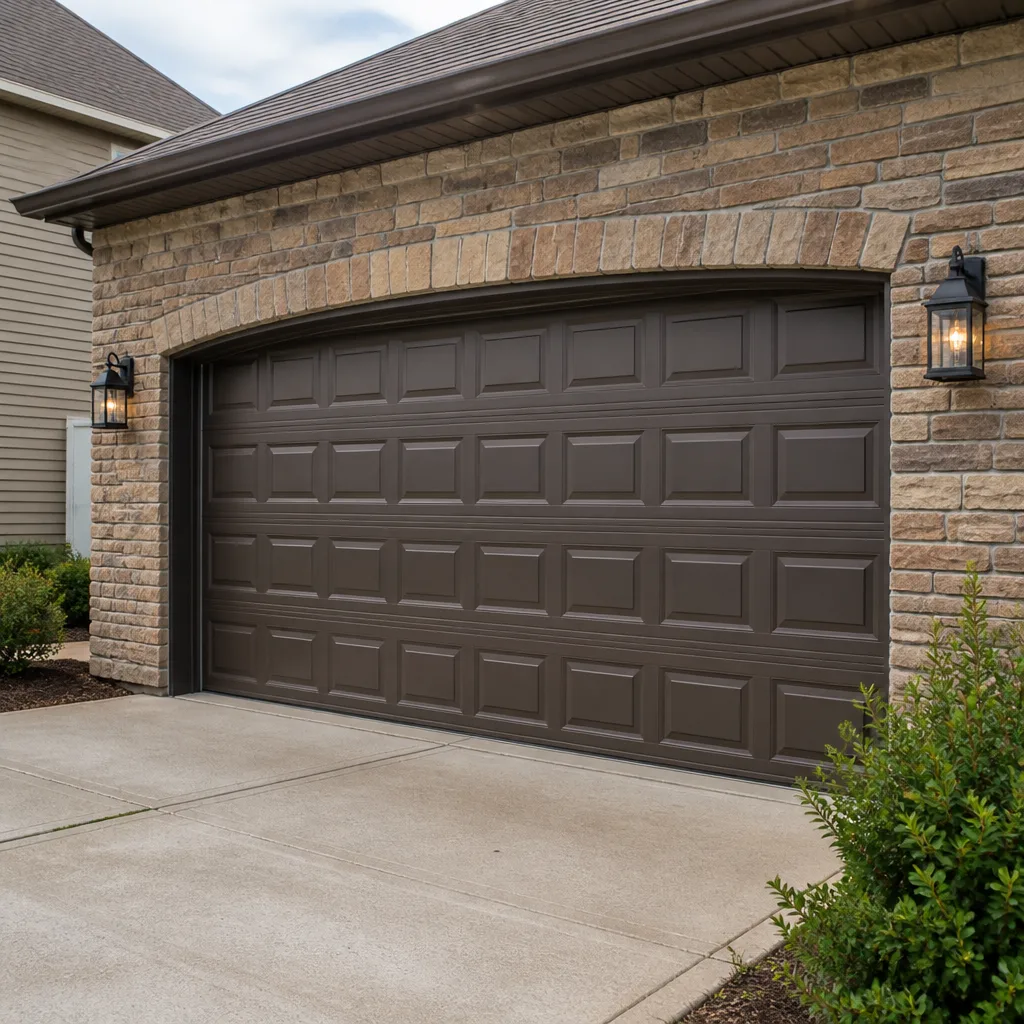 Raised-panel steel
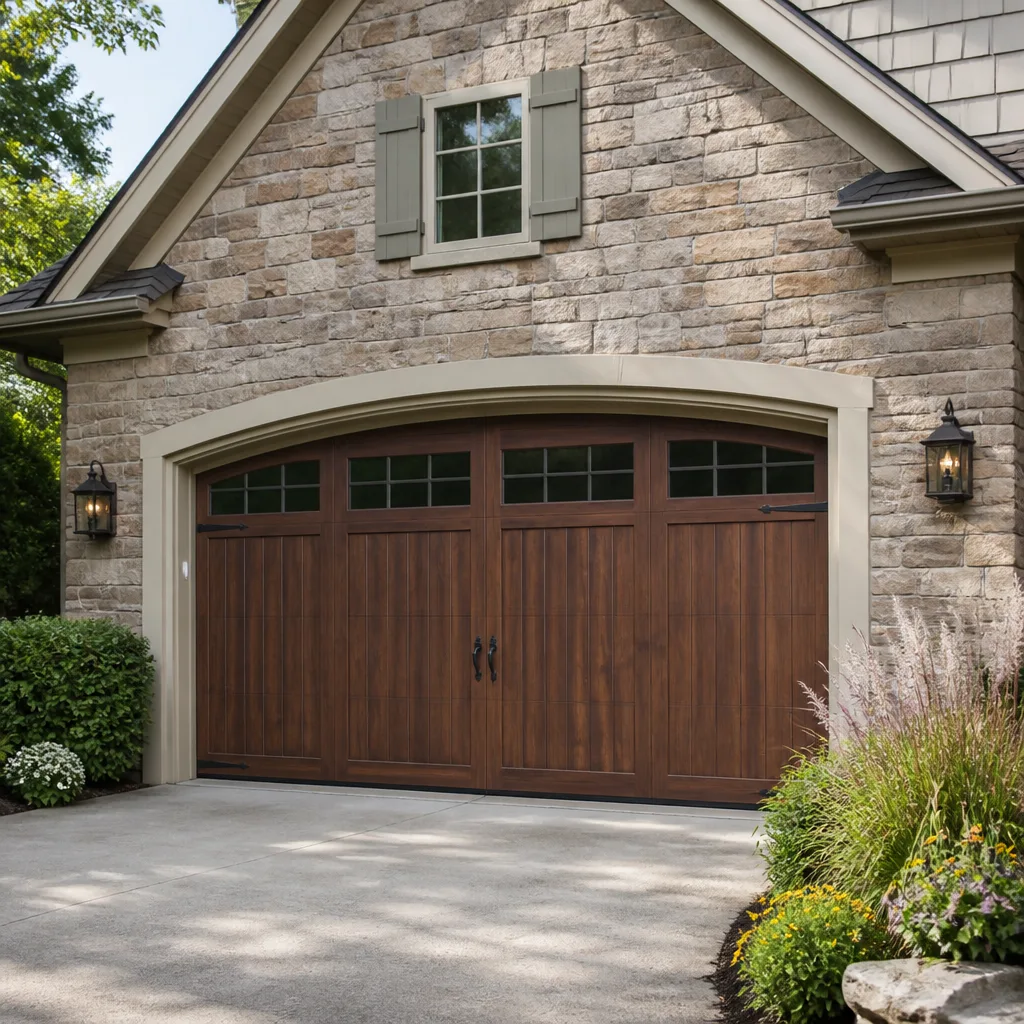 Carriage house
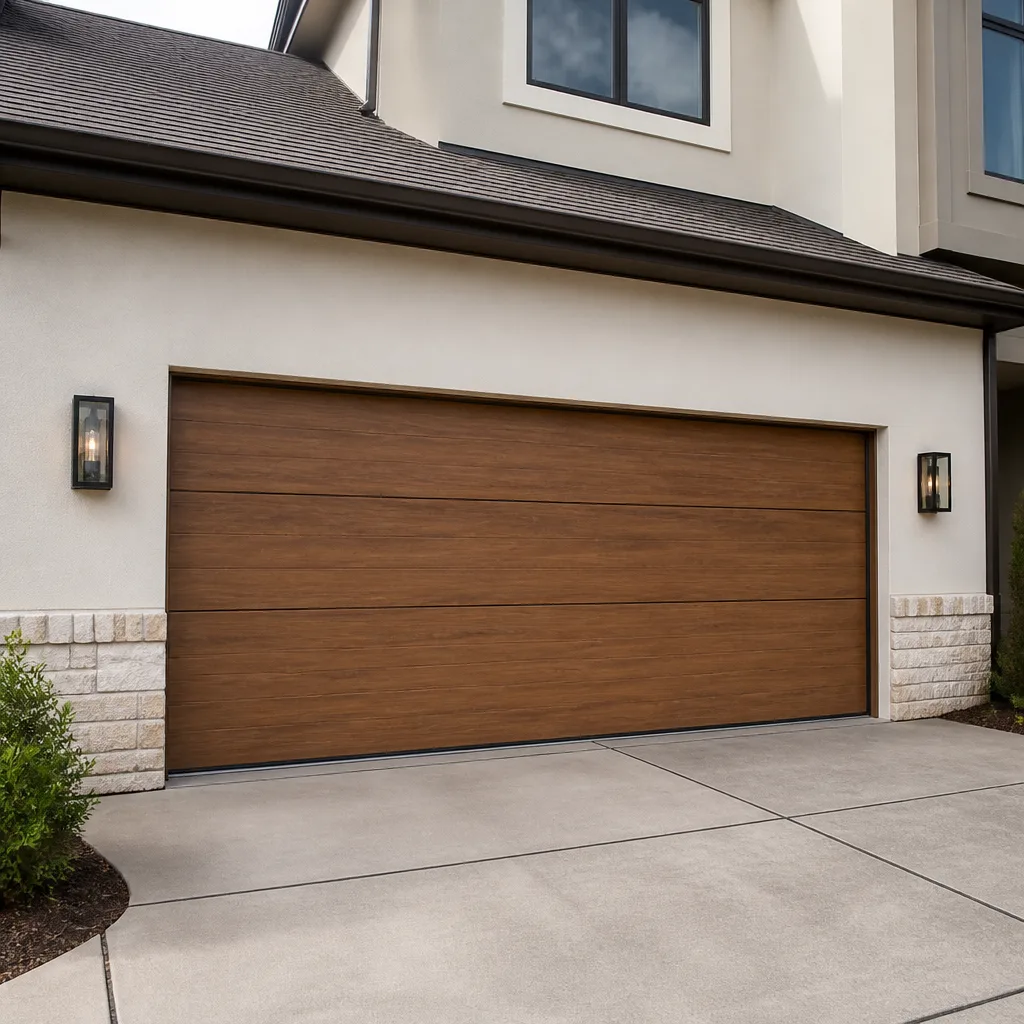 Modern flush
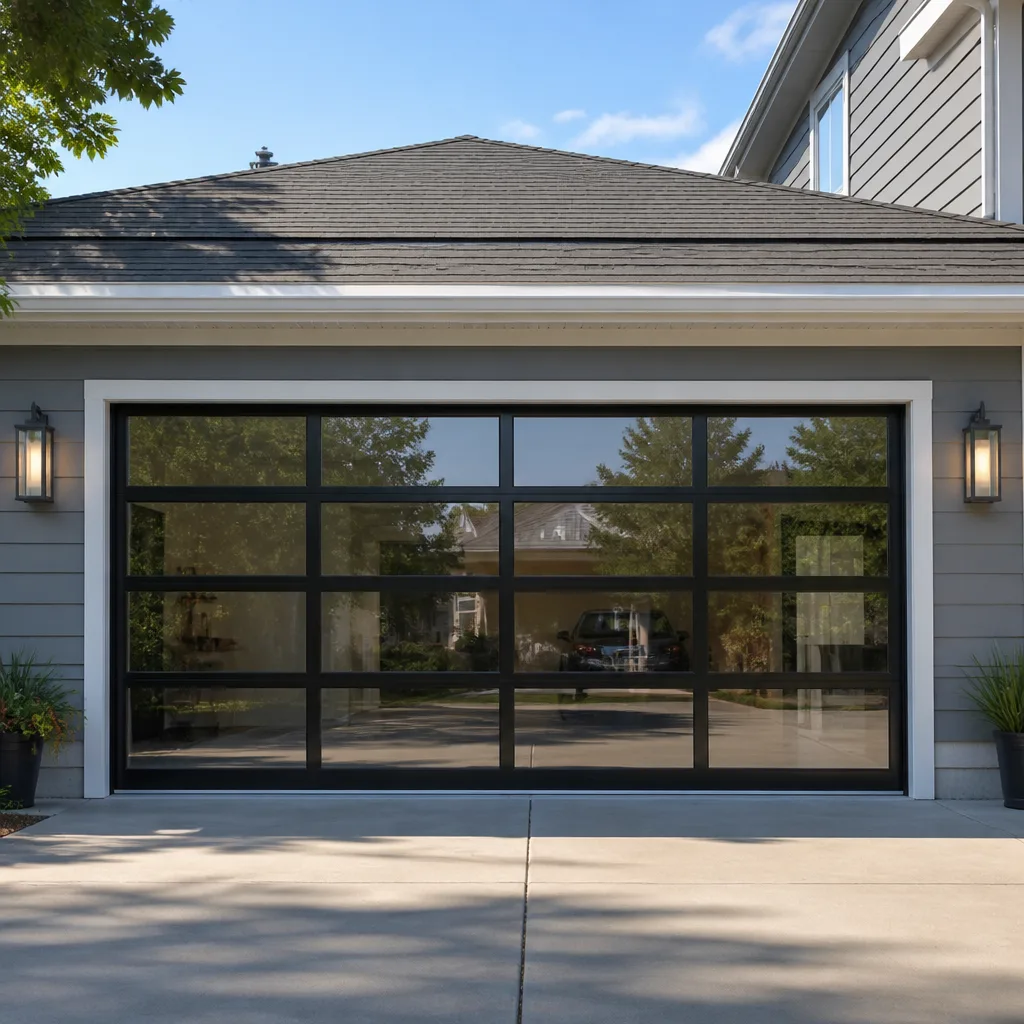 Full-view glass
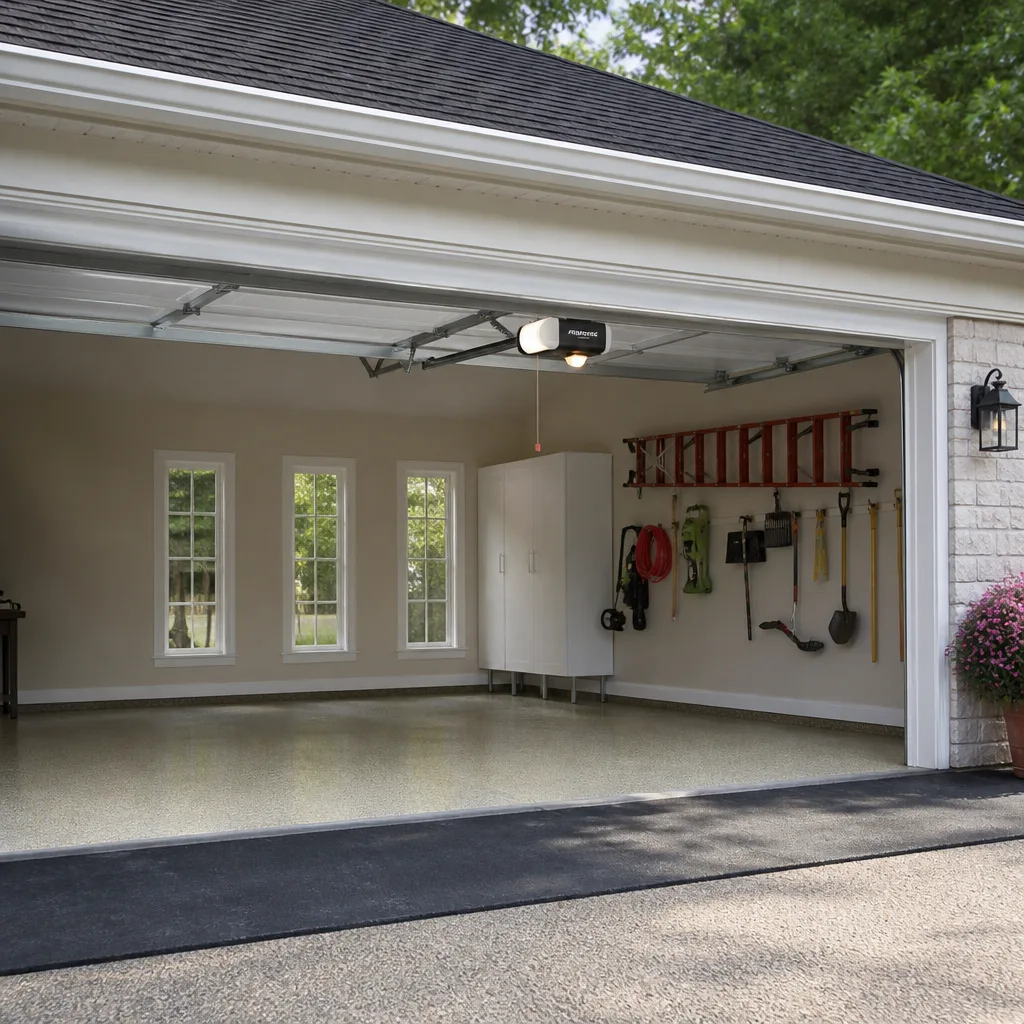 LiftMaster openers
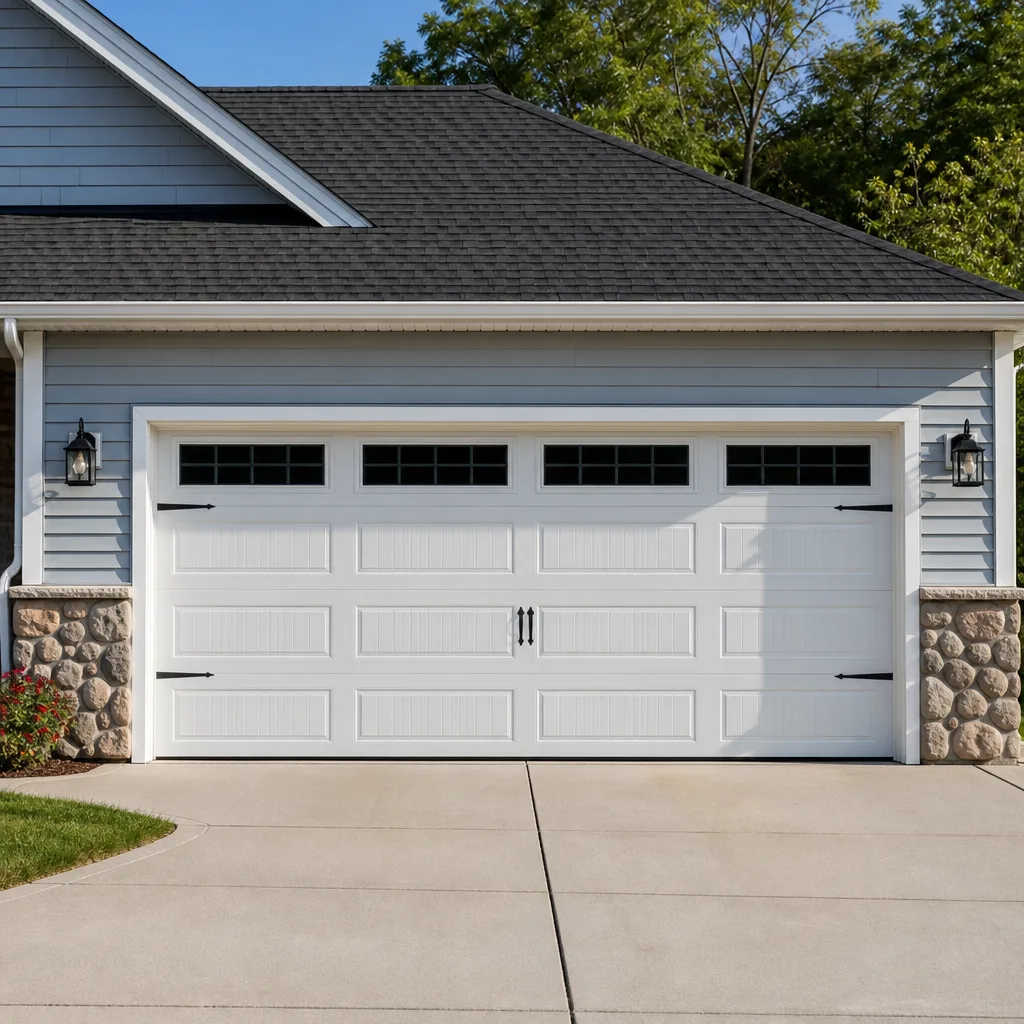 Chamberlain openers
Full 25-point door and opener safety check with every visit - springs, cables, rollers, tracks, and your LiftMaster or Chamberlain opener included
You get a price before we start. It does not change when the truck arrives.
Get your free estimateDIY vs Professional Garage Door: The Hemet Homeowner’s Decision Guide
Here’s something most garage door guides won’t tell you straight out: the DIY-versus-pro question has almost nothing to do with how handy you are. It has to do with physics. A torsion spring on a double-wide door stores roughly the equivalent energy of a small car rolling at 5 mph. When that spring lets go uncontrolled, it doesn’t care whether you’ve been wrenching on things for 30 years or 30 days. This guide walks Hemet homeowners through exactly where the line sits between sensible weekend work and genuinely dangerous territory, which tools actually pay for themselves, and how our local climate changes the risk math in ways a national blog won’t mention.
Styles & brands we work with
- Raised-panel steel
- Carriage house
- Modern flush
- Full-view glass
- LiftMaster openers
- Chamberlain openers
Quick Answer
Most garage door tasks fall cleanly into two buckets: about 20% are safe for an informed DIY homeowner (lubrication, sensor cleaning and alignment, remote battery replacement, weather seal swaps), and the other 80% involve stored mechanical tension, mains-voltage wiring, or door-weight bearing components that demand professional tools and training. If the task involves a torsion spring, a lift cable, or track work under load, call a Hemet garage door specialist. If it involves cleaning, lubricating, or swapping a consumable, you can usually handle it with $15 in supplies and an afternoon.
Table of Contents
- The Physics Line: What Actually Makes Certain Tasks Dangerous
- Safe DIY Tasks: What You Can Confidently Handle
- Never DIY: Tasks That Are Non-Negotiable Professional Work
- The Cost-Benefit Reality: What You Actually Save on DIY
- Hemet-Specific Factors: Heat, Dust, and Door Stress
- The Masked Problem: When DIY Fixes Hide Real Damage
- The One Question Every DIYer Must Answer Honestly
- Common Mistakes to Avoid
- When to Call a Professional
- Frequently Asked Questions
- The Bottom Line
The Physics Line: What Actually Makes Certain Tasks Dangerous
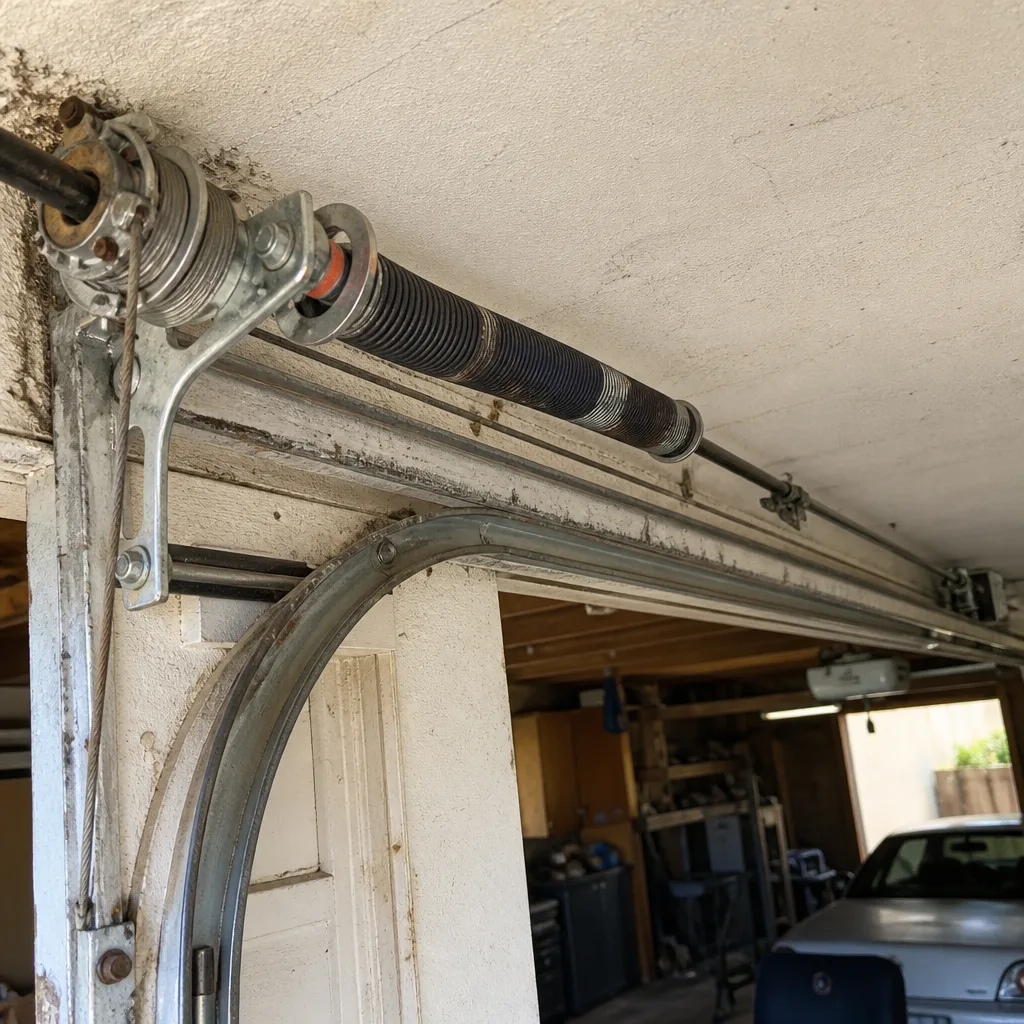
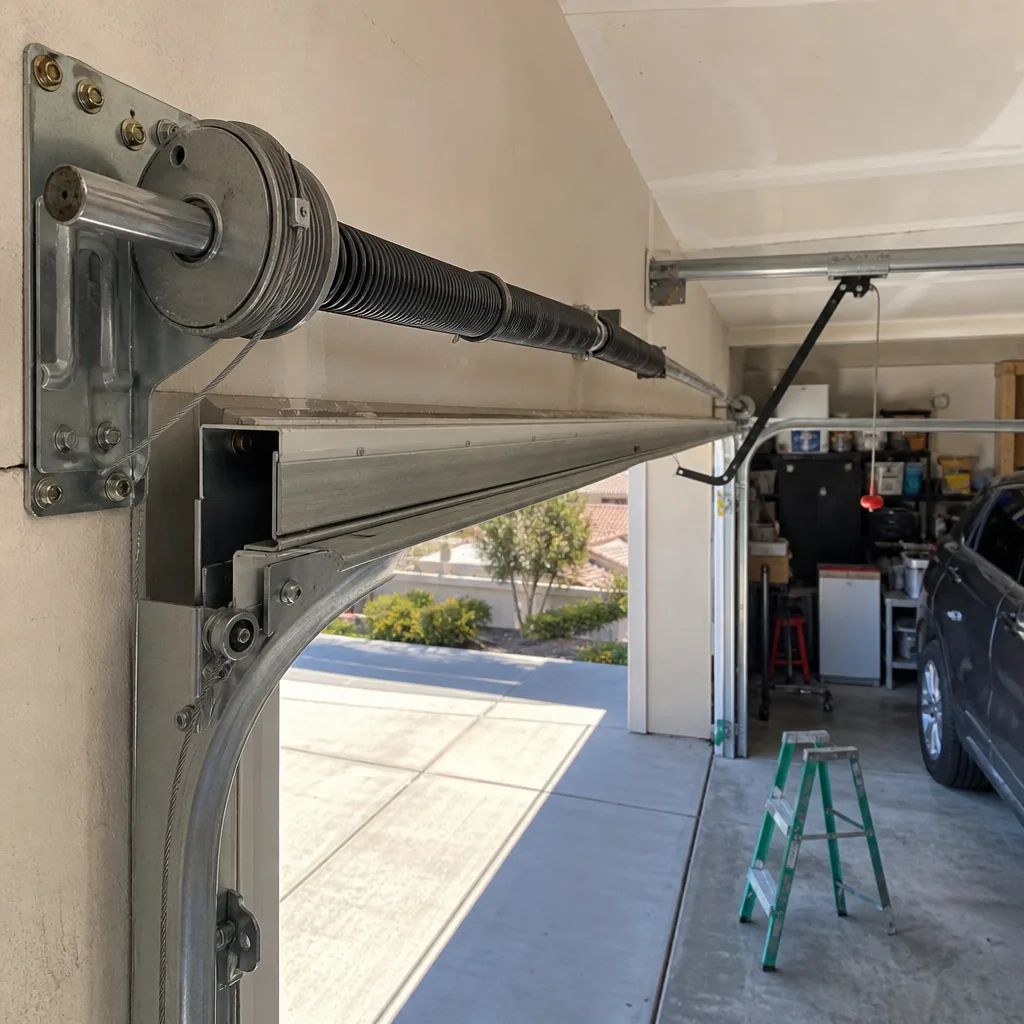
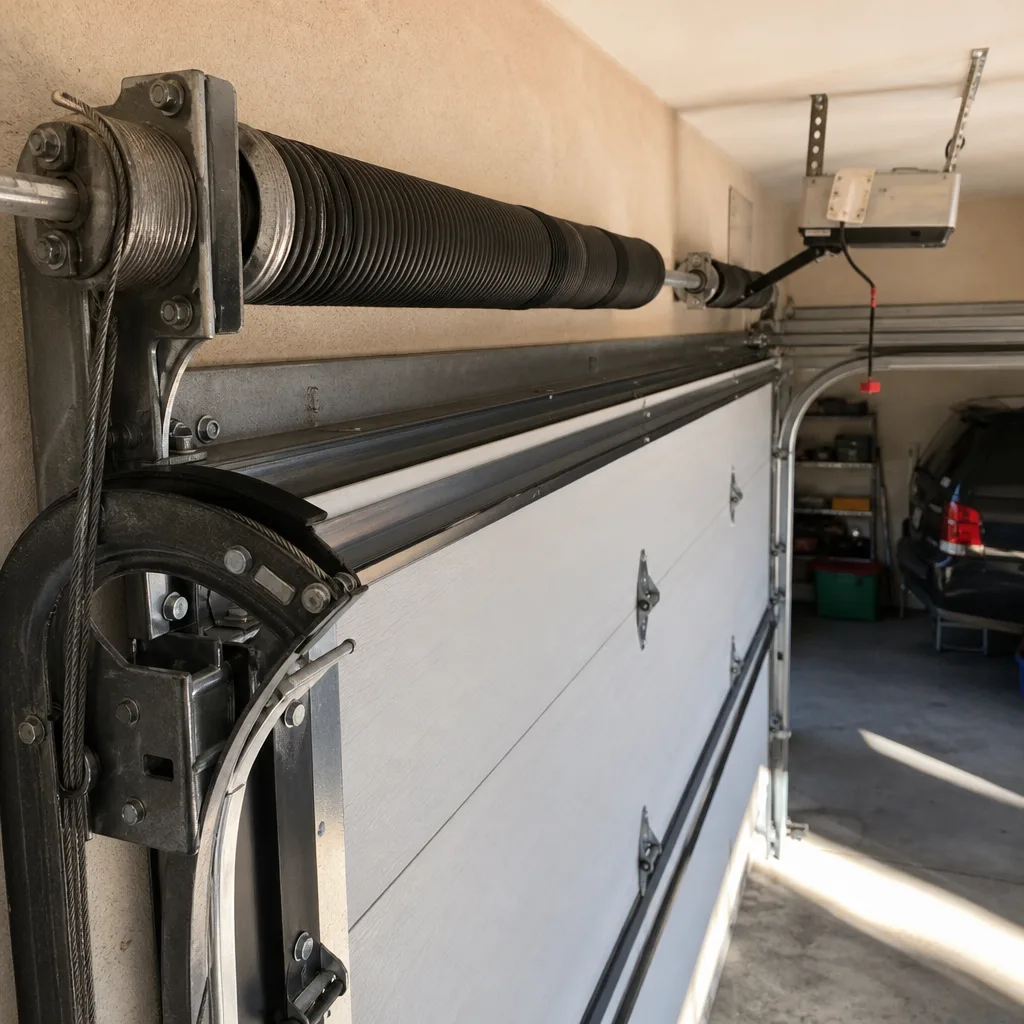
Here’s the core distinction that most home improvement blogs gloss over. There are two types of energy stored in a typical garage door system. The first is the obvious one: a 150 to 400 pound door panel assembly that wants to fall. The second is the sneaky one: the torsion spring system above the header that stores rotational force. That force is what lifts the heavy door, and it’s measured in hundreds of foot-pounds. When a torsion spring snaps, it’s not a casual event. It releases every bit of that stored energy in a fraction of a second. The winding cone, the spring coil end, and even the tools you’re using can become projectiles.
This is why spring work is categorically different from, say, replacing a hinge or cleaning a sensor. A hinge can pinch a finger. A spring can break a forearm. The Department of Labor’s injury data on garage door work consistently shows torsion springs as the leading cause of serious injury in garage door incidents, not the door itself falling. Understanding this distinction reframes the entire DIY decision. You are not asking “can I figure this out?” You’re asking “what happens to me if I get it wrong?”
Hemet homes built in the last 30 years almost universally have torsion systems, not the older extension-spring setups you might find on a 1960s ranch elsewhere in Riverside County. Modern torsion designs are more efficient and quieter, but they pack more energy per turn. A single-car door in Hemet might have a pair of 7-foot springs rated for a 130-pound door. A double car door out in Valle Vista could easily have springs rated for 250-plus pounds. The higher the door weight, the more stored energy in that system, and the more consequential the failure mode.
Safe DIY Tasks: What You Can Confidently Handle
The safe list isn’t a concession for people who don’t want to spend money. It’s the legitimate boundary where door maintenance overlaps with normal homeowner skills. Here’s what we tell our own customers they can honestly take on.
Lubrication
Every garage door has friction points: hinges, rollers, the spring coils themselves, and the opener rail. A can of white lithium grease or a silicone spray runs $8 to $15 at any Hemet hardware store. The job takes 20 minutes. You’re not adjusting anything, not loosening anything, and not under loading tension. You’re applying lubricant to moving surfaces while the door is in the closed position. This is the highest-value maintenance task for extending equipment life, and it’s perfectly safe. We recommend doing it twice a year in Hemet, once in spring and once in fall, because our dry, dusty conditions accelerate friction wear on rollers and hinges. For step-by-step guidance, see our breakdown on Garage Door Repair in Hemet, which covers seasonal maintenance for local homes.
Sensor Cleaning and Alignment
When the door refuses to close and the sensor lights are blinking, the issue is usually a dirty lens or a slight misalignment. The fix involves wiping the glass with a soft cloth and nudging the bracket back into position. No force involved, no springs touched, no cabling. The sensors themselves cost $30 to $60 to replace if truly faulty, which we do for customers seeking Garage Door Opener Repair in Hemet, but cleaning and alignment are genuinely DIY territory. The key test: check whether both sensor lights are solid. If one blinks, it’s alignment or obstruction. That’s the whole diagnostic.
Remote and Keypad Battery Replacement
This isn’t even a repair. It’s a consumable swap. LiftMaster, Chamberlain, Genie, and Craftsman remotes all use standard coin cells or 9-volt batteries, and the process is usually a single screw or a slide-off back cover. If the remote won’t program after battery replacement, the issue is usually a bad circuit board, which is a specialist fix. But the battery itself, and even the keypad battery, should never trigger a service call.
Weather Seal Replacement
The bottom rubber seal that keeps dust and water out slides or snaps into a track on the bottom of the door. It costs $20 to $40, and replacement takes about an hour for a patient homeowner. You’re working at ground level, the door is down, and there’s no tension. This is especially relevant in Hemet, where summer winds push fine dust and occasional monsoon debris under door gaps. Replacing a brittle, cracked seal is straightforward. If the seal track itself is bent or damaged, that’s a different story; that needs pro attention because it changes how the door meets the ground.
Never DIY: Tasks That Are Non-Negotiable Professional Work
These are not preferences. These are tasks where the physical risk profile and the technical knowledge requirements rule out competent amateur work regardless of experience level.
Torsion Spring Replacement
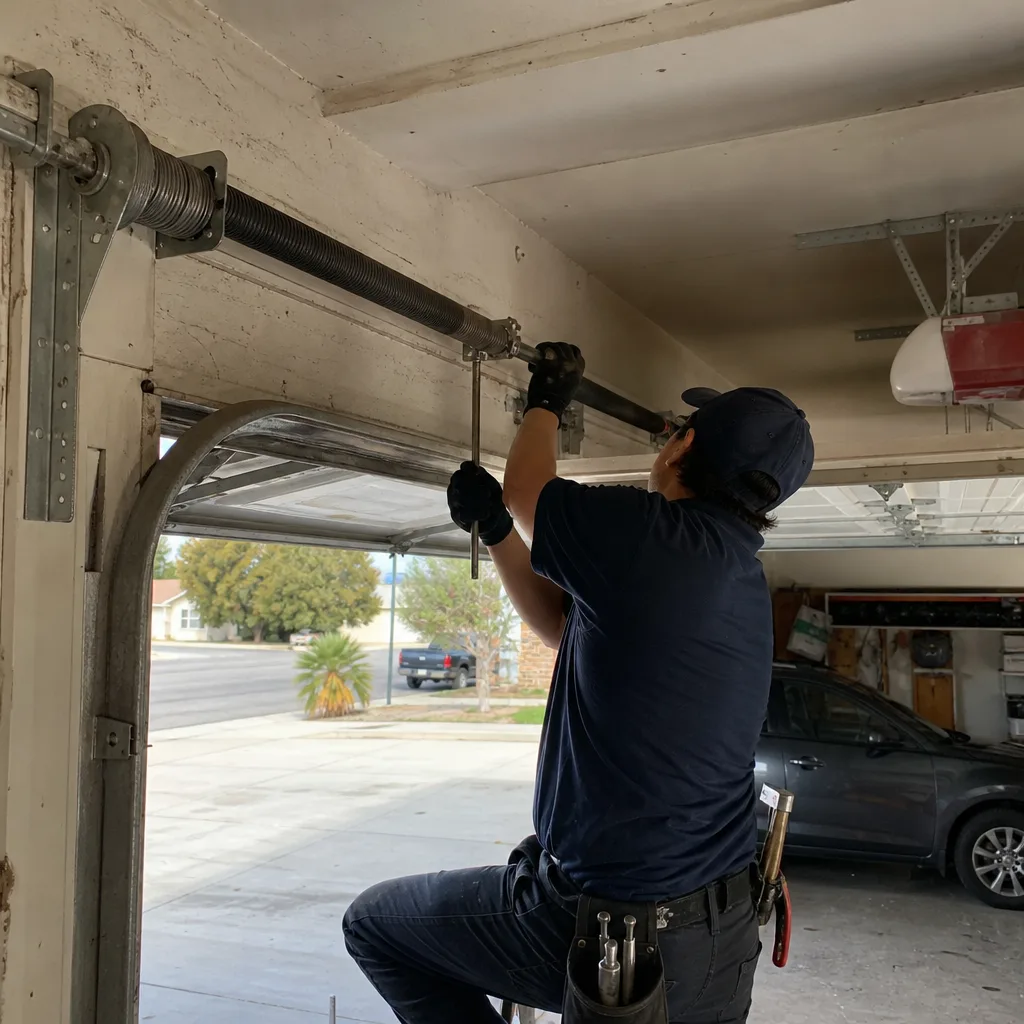
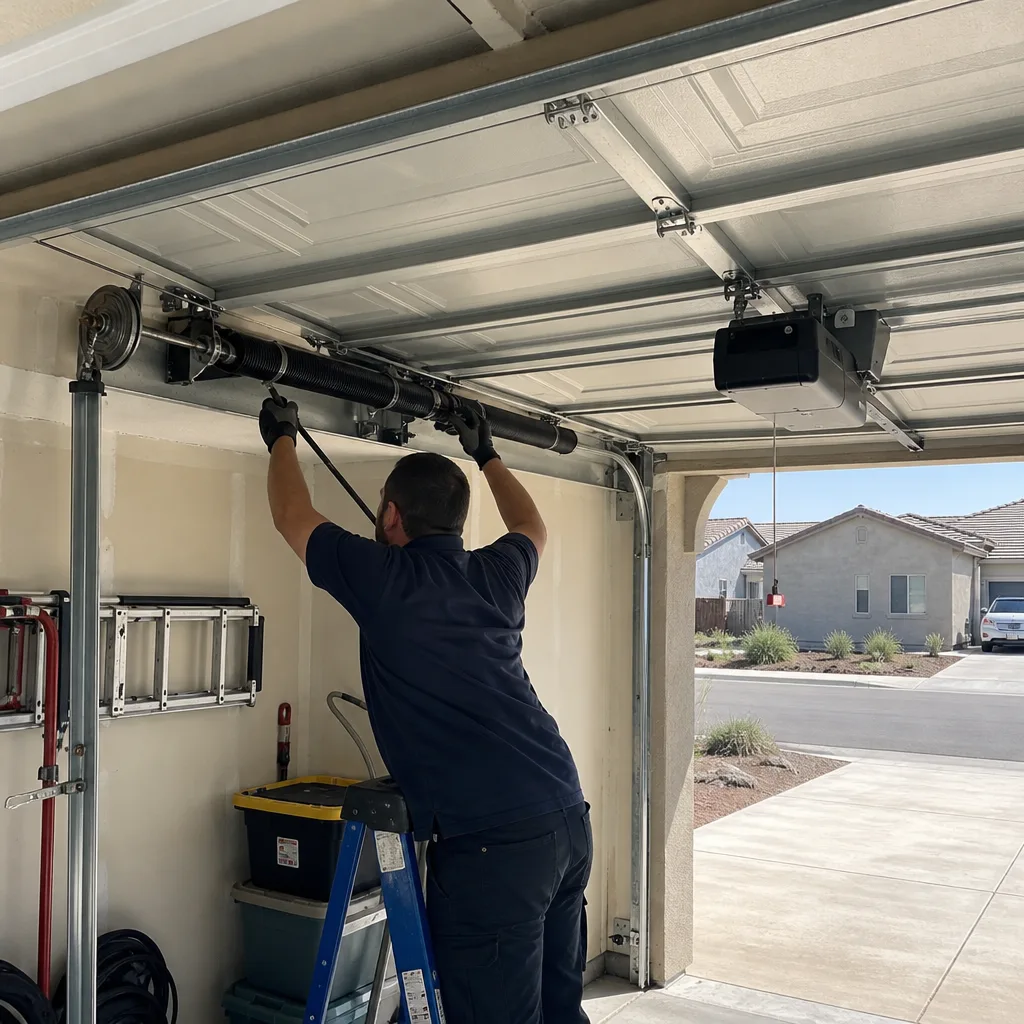
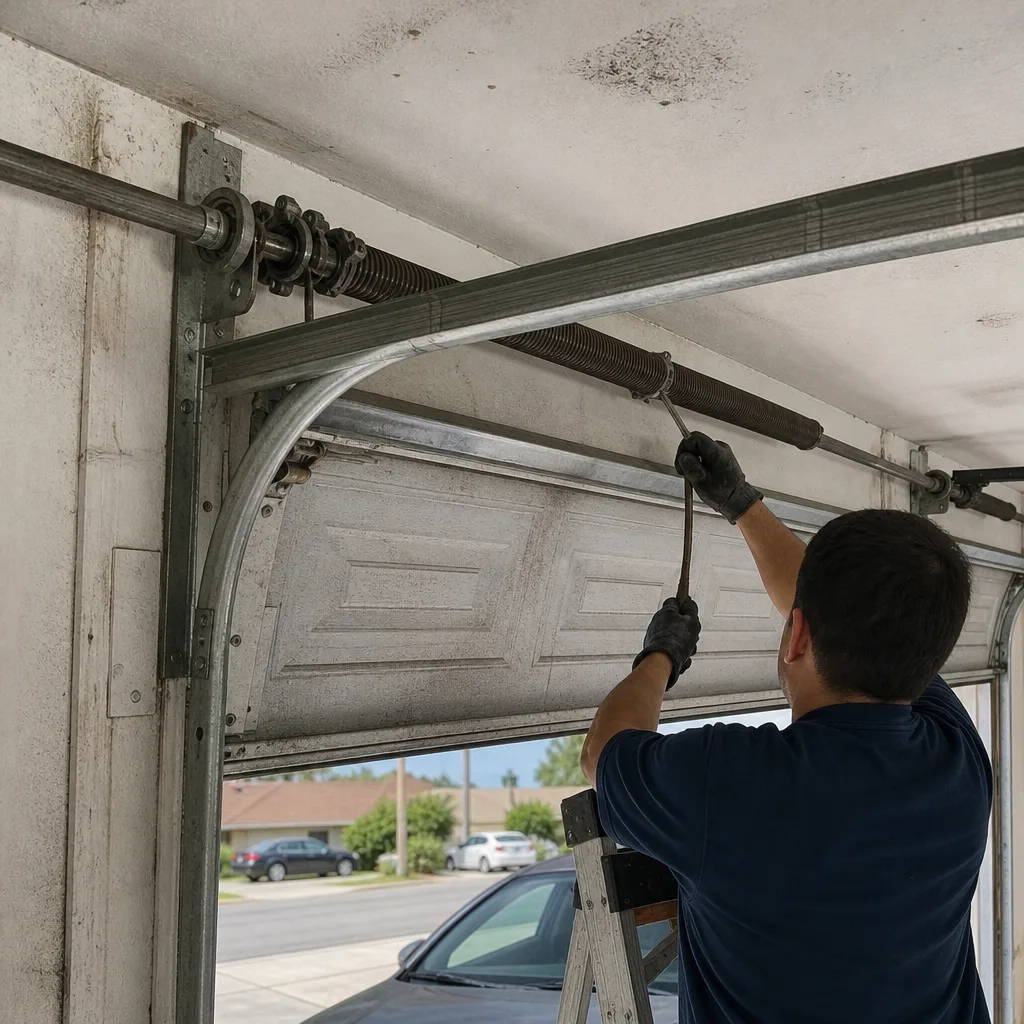
This is the category-defining task. A torsion spring compresses and releases rotational force through winding bars inserted into the spring’s cones. The tools are purpose-specific: a matched pair of steel winding rods, typically 18 inches long and half-inch diameter. The process involves loading the spring to a precise number of quarter-turns. One slip means the bar becomes a projectile. This is the single most common cause of serious injury in garage door work. Even a perfectly executed amateur job carries issues: if the spring isn’t rated for the exact door weight, the opener ends up overworking, and you’ll be replacing that motor within two years. Professional spring replacement in Hemet accounts for roughly a third of all service calls we see, and every one of those involved a door that had become genuinely unsafe to operate.
Cable Re-Threading
Garage door lift cables run through pulleys and wrap around drums at each end of the torsion shaft. When one breaks or jumps off its drum, the remaining cable is now carrying the entire door weight. The door hangs unevenly, which puts shear stress on the track brackets and the panel hinges. Re-threading requires releasing tension from the good side, which means working on the torsion system. Anyone who tells you this is a simple YouTube job is either misinformed or has never actually done it. In our experience, cable failures are the most common follow-up after a botched spring job: the homeowner changed a spring, didn’t balance the door, and the cable couldn’t take the load distribution.
Track Realignment Under Tension
Vertical tracks are mounted to the wall with lag bolts. Horizontal tracks hang from the ceiling. When a track is bent or pulled out of alignment, the rollers bind, and the door starts fighting the opener. Realigning track means loosening the brackets while the door is still in the track, sometimes under partial load if you can’t fully open it. The right move is releasing the door’s balance system first, and that puts you back in spring territory. This is why track work is always professional work, even when the visible damage looks minor. A door that’s 4 degrees out of alignment at the track joint puts asymmetric load on every panel hinge down the line.
Opener Circuit Board or Drive System Repair
Openers are low-voltage at the wall button and high-voltage at the motor. The logic boards in modern LiftMaster and Chamberlain units are sensitive to mains-voltage wiring and to static, which makes them easy to fry if you’re poking around without understanding the circuit. The drive systems, whether chain, belt, or screw, all have specific motor-load specs. We repair openers as a standalone specialization for a reason; it’s the job most likely to get misdiagnosed by a general handyman. For the technical breakdown of what goes wrong and how the diagnosis works, see Garage Door Opener Repair in Hemet. If the issue is the door itself, not the motor, that’s a separate speciality; it falls under Garage Door Repair in Hemet.
The Cost-Benefit Reality: What You Actually Save on DIY
The economics of garage door DIY are more nuanced than “save the labor.” Here’s a straight analysis, using Hemet’s realistic market.
The Tempting Job: Spring Replacement
Two torsion springs for a standard 16-foot door cost between $120 and $220 online, depending on wire gauge and cycle rating. The winding bars are $25 to $40. So parts look like $150 to $260 versus a professional spring replacement in Hemet, which typically runs $280 to $450 including parts and labor. What you’re saving, in dollar terms, is $100 to $190. What you’re risking is a serious injury. But the less visible cost: if you buy the wrong spring rating, the door won’t balance. The opener works harder, burns out the motor or strips the gear, and you’re now spending $400 on an opener repair on top of a door that still doesn’t run right. We see this exact sequence in Hemet a few times a month. The customer saved $150 on a spring job and spent $500 fixing the downstream damage.
The Honest Afternoon: Lubrication
Supplies cost under $15. It takes 20 minutes. The door runs quieter and the parts last longer. There is no cost-benefit tension here. This is the best DIY task on the list because it’s purely maintenance with zero risk.
The Hidden Labor: Weather Seal
A bottom seal is $20 to $40. The job looks simple. But the old seal on a 15-year-old door is often fused into a corroded track, and now you’re drilling out rusted screws. Freeing that track can take three hours, and if the track is too bent to reuse, the job changes scope. Professional replacement is typically $80 to $120. If you have patience and the door is in decent shape, DIY genuinely makes sense. If the door is 20 years old, expect the track to fight back.
Real Numbers Comparison
| Task | DIY Materials Cost | Pro Service Range (Hemet) | DIY Time | Risk Level |
|---|---|---|---|---|
| Lubrication | $10 – $15 | $75 – $100 (as part of inspection) | 20 min | None |
| Sensor Cleaning | $0 – $5 | $75 – $125 (if service call needed) | 15 min | None |
| Remote Battery | $0 – $12 | $30 – $50 | 5 min | None |
| Weather Seal | $20 – $50 | $80 – $130 | 1 – 3 hr | Low |
| Torsion Spring Replacement | $145 – $260 | $280 – $450 | 3 – 5 hr + risk | Severe |
| Cable Re-threading | $40 – $80 (parts alone) | $160 – $250 | 4 – 6 hr + risk | Severe |
These are the actual numbers we quote Hemet homeowners every week. They’re not insurance-company abstractions; they’re local market reality, and they represent what you should expect from any reputable garage door shop in the area. These are today’s market figures, not seasonal prices.
Hemet-Specific Factors: Heat, Dust, and Door Stress
Every city has its own wear patterns. Ours are heat and dust, and they interact with garage door work in ways most people don’t think about until they’re 20 minutes into a frustrating job.
First, the heat. Hemet garage interiors routinely hit 100°F to 110°F between June and September. Working in that environment affects fine motor skills, reaction time, and judgment. A DIY guide written in Oregon doesn’t account for the fact that you’re sweating through your shirt while handling a winding bar. Heat exhaustion is a real safety variable, not a comfort concern. When the thermometer reads 108°F in your Hemet garage, your body is already working at reduced capacity. That’s the wrong time to load a torsion spring.
Second, the dust. Hemet’s year-round low humidity and seasonal winds mean fine particulate gets into everything. That grit accelerates roller wear, dries out lubricants faster than coastal climates, and fouls sensor lenses. It also means the maintenance interval here is shorter. We tell Hemet homeowners to lubricate at least twice a year, versus the annual schedule you’ll see in national guides. This matters for the DIY-versus-pro decision because clean, properly lubricated parts fail less often, which means fewer emergency calls and fewer times you’re tempted to fix something under pressure at 7 a.m.
Third, our housing stock. Hemet’s development boom from the 1990s through 2010s means there are tens of thousands of homes with garage doors now at the 15-to-30-year mark. That’s exactly the age when springs hit their cycle limit, openers wear out their drive gears, and panel sag begins. If your door has never had a spring replacement and you’re in a home built before 2010 in the Valle Vista or East Hemet neighborhoods, you’re inside the window where failure is statistically most likely. This isn’t a sales pitch; it’s the maintenance curve of the equipment that’s on your house.
The Masked Problem: When DIY Fixes Hide Real Damage
This is the section most DIY guides skip. It’s not about whether your repair works in the moment. It’s about what you didn’t see, and what gets worse while you’re not looking.
The classic example in Hemet: a homeowner notices the garage door is noisy, so they lubricate it. The noise quiets down. Feels like a win. But the noise was a roller with a failing bearing, and the lubricant bought a few weeks of quiet while the bearing ground itself down. By the time the roller fails completely, it’s seized and chewed up the track. The $12 lubrication job turned into a $350 track and roller replacement.
Another frequent pattern: the door starts opening slowly, so the homeowner adjusts the opener force settings. That adjust solved the symptom. But the actual cause was a door that had lost its balance because a spring had weakened. Raising the opener force setting means the motor pushes harder. The motor overheats, the drive gear strips, and now the opener is dead. The underlying spring problem remained, and the overworked opener became collateral damage. Professional diagnosis would have caught the balance issue on sight, because unbalanced doors are obvious to a trained eye within the first three inches of manual lift.
The point here is not that every noise or symptom is catastrophic. It’s that your garage door is a system. A symptom can have multiple causes, and some of those causes are invisible to a homeowner who hasn’t seen hundreds of failed doors. We work on all eight major brands, so we see the specific failure patterns of LiftMaster, Chamberlain, Genie, Clopay, Amarr, Wayne Dalton, Craftsman, and Raynor systems every day. We know what a struggling Wayne Dalton torque-master looks like versus a failing Amarr spring bar. The value of a specialist isn’t just the fix; it’s the accurate read on what’s actually wrong.
The One Question Every DIYer Must Answer Honestly
Here’s the decision framework we give every Hemet homeowner who calls us asking about DIY repair. It’s a single question, and it’s deliberately blunt: “If this goes wrong, what is the worst physical outcome?” Not the worst financial outcome. The worst physical one.
If the answer is “a pinched finger” or “a scratched panel,” that’s a green-light task. You can handle lubrication, sensor work, battery swaps, and seal replacement. The worst case is a minor nuisance.
If the answer is “a broken bone” or “my hand could get caught in a torsion bar,” that’s a hard stop. No amount of YouTube research makes that task safe for an amateur. Spring work, cable work, and track under tension all fall here.
If the answer is “I don’t know what could happen,” that’s the only answer that matters, and it’s a red flag by itself. Not knowing the failure mode means you haven’t understood the system well enough to work on it. That’s not an insult; it’s a protection. Most homeowners have no reason to understand torsion mechanics, and that’s fine. That’s what specialists are for.
Once you’ve answered that question honestly, the financial decision flows naturally. Low physical risk plus modest savings equals a reasonable DIY project. High physical risk plus small dollar savings equals a bad trade. You are not spending $150 on a professional spring replacement. You’re spending the difference between a professional spring and a DIY spring, which is about $150, and what that $150 actually buys is the guarantee that the person holding the winding bars has done this hundreds of times before.
Common Mistakes to Avoid
- Using the wrong lubricant. WD-40 is a solvent, not a garage door lubricant. It strips away existing grease and leaves metal components running dry. Use white lithium grease on hinges and rollers, and a silicone-based spray on springs and the opener rail. Every hardware store in Hemet carries both.
- Adjusting opener force settings to compensate for a heavy door. If the door feels heavy when you lift it manually, that’s a spring or cable problem. Crank up the opener force, and you’ll destroy the motor gear within six months. This is the most expensive DIY mistake we see, almost always north of $300 in preventable damage.
- Trying to replace one spring instead of both. Springs wear in pairs. If one breaks, the other is at the same cycle count and will fail soon. You’ll be back in the same position in months, plus you’ll have an unbalanced door that stresses every moving part. Replacing both at once is the only professional practice.
- Working on a hot day in an enclosed Hemet garage. Torsion spring work requires steady hands and full attention. A 108°F garage doesn’t just make you uncomfortable; it degrades your grip strength and reaction speed. If a professional wouldn’t do it under those conditions, neither should you.
- Watching a video and mimicking without understanding the system. A YouTube tutorial shows you one door, one spring configuration, one set of conditions. Your door is different. The winding count differs by door weight and spring wire gauge. Passive imitation is not the same as understanding what the winding bars are doing to the stored energy.
- Ignoring a noisy door because it still opens. Noise is a symptom. It might be a bearing, a worn roller, a loose bracket, or a failing spring. Early intervention on noise costs a fraction of what the eventual failure costs. A $150 roller replacement today beats a $600 track and panel repair next year.
- Refusing to call for a quote because “the door still opens fine.” Most catastrophic failures don’t announce themselves with a dramatic event; they announce themselves with small symptoms that get ignored. If your door is 15-plus years old and has never had major service, a professional inspection is the cheapest insurance you’ll buy this year.
When to Call a Professional
You should call a garage door professional in Hemet if the task involves torsion springs, lift cables, track realignment, opener electrical work, or any situation where the door is stuck in the open or closed position and you can’t safely identify the cause. If the door won’t open and you’re late for work, that’s not the time to experiment with a screwdriver; that’s the time to call. If the door fell closed and you heard a spring snap, don’t touch it, don’t try to lift it, and don’t operate the opener. A door with a broken spring is dead weight, and the remaining cable is under asymmetric load.
We also recommend calling when a problem recurs after you’ve already tried a DIY fix. A masking repair, as covered in the section above, delays the real diagnosis and raises the eventual cost. If you’ve lubricated, cleaned, and reset the sensors, and the door still misbehaves, the problem is likely in the balance system or the opener logic board, and that’s specialist territory.
Garage Door Service Hemet has been working Hemet doors since 2018, and our specialization means every technician works exclusively on garage systems, not torn between plumbing jobs and door repairs. We service all eight of the major brands, including Amarr, Wayne Dalton, Craftsman, and Raynor, so the specific equipment on your house gets a brand-matched diagnosis, not a generic replacement. For planned projects like a new door, Garage Door Installation in Hemet walks through the full process from measuring to final balance. If you’re in a jam right now, call (833) 589-9121 for a free estimate. In our experience, most diagnosis is straightforward once someone who knows the equipment gets eyes on it.
Frequently Asked Questions
Professional torsion spring replacement on a standard Hemet garage door typically runs $280 to $450, including both springs and labor. The exact price depends on door weight, spring wire gauge, and cycle rating. You’ll get a written quote before any work starts. Call Garage Door Service Hemet at (833) 589-9121 for a firm number on your specific door.
You should not attempt torsion spring replacement yourself, regardless of your general mechanical experience. Torsion springs store enough rotational force to cause severe injury if the winding bar slips or the wrong procedure is used. This task is the single most dangerous piece of garage door work, and the dollar savings from DIY are small relative to the physical risk. A professional in Hemet will quote you a firm price before touching the door.
Hemet’s summer heat causes the metal in your tracks, hinges, and door panels to expand. If the door was installed or adjusted without accounting for that expansion, the rollers bind when temperatures climb past 100°F. Lubrication helps, but the real fix is a track alignment and door balance check. This is a common issue we handle for Hemet homeowners every summer, and it’s usually resolved in a single visit.
Twice a year, minimum. Hemet’s dry, dusty climate strips lubricant faster than coastal areas, and the fine particulate acts as a mild abrasive on rollers and hinges. Spring and fall lubrication with white lithium grease on metal-to-metal contacts will measurably extend the life of your door and opener. This is the easiest maintenance task to do yourself, and it takes about 20 minutes.
Garage Door Service Hemet services openers from LiftMaster, Chamberlain, Genie, Clopay, Amarr, Wayne Dalton, Craftsman, and Raynor. That covers nearly every opener currently in Hemet homes. We stock compatible parts for those brands so repairs on existing equipment maintain factory compatibility and warranty status. Your specific brand gets matched with its own parts, not a universal substitute.
If the door itself is structurally sound and the panels aren’t rusted through or sagging, repair is often the smarter financial move. A new torsion spring set and balanced track will buy another 5-plus years of service for a few hundred dollars. If the door has panel rot, failing hinges, or severe track wear, replacement makes more sense. We’ll give you an honest read on what’s worth fixing versus replacing in Hemet, and you can explore the full process in our Garage Door Installation in Hemet page.
The Bottom Line
The DIY-versus-pro decision on garage doors in Hemet comes down to physics, not pride. Tasks involving stored tension, door weight distribution, or mains voltage belong in the hands of a trained specialist, not because homeowners aren’t capable, but because the failure mode of these systems is genuinely dangerous. Tasks involving consumable parts and friction reduction, like lubrication, sensor cleaning, and seal swaps, are legitimate DIY work that saves real money with minimal risk. Hemet’s heat and dust shorten the maintenance interval and stress the equipment, which makes proactive care more important here than in milder climates. When the job crosses the physics line, call a specialist. When it doesn’t, handle it and move on.
Written by the team at Garage Door Service Hemet, serving Hemet since 2018.
See the difference
 Before
 After
 Before
 After
 Before
 After